Soft launch: Soldier biographies and research notes vary in completeness. Prefer class-roster, NARA, newspapers, and other cited sources for contested facts — treat Research notes as leads, not settled history. Anyone can correct a page; contact us with questions.
Isserman, Manfred A. (32872790): Difference between revisions
Normalize nativity/religion; split arm of service from branch |
Dedupe Witnesses to Nuremberg source bullet |
||
| (3 intermediate revisions by the same user not shown) | |||
| Line 22: | Line 22: | ||
|class_number=16 | |class_number=16 | ||
|class_display=16 | |class_display=16 | ||
|birth_date=10 June 1920 | |||
|death_date=18 June 2012 | |||
|birth_place=Berlin, Germany | |||
|death_place=Urbana, Illinois | |||
|rank_final=Master Sergeant | |||
|awards=Bronze Star | |||
|awards_grid=Bronze Star | |||
|awards_ribbons=Ribbon_Bronze_Star_Medal_ribbon.png | |||
|awards_ribbon_rows=Ribbon_Bronze_Star_Medal_ribbon.png | |||
}} | }} | ||
| Line 29: | Line 38: | ||
== Biography == | == Biography == | ||
Manfred “Fred” Alexander Isserman was born on 10 June 1920 in Berlin, Germany. He married his school sweetheart, Ellen Kann, on 14 April 1939, and the couple escaped to England before emigrating to the United States in May 1940. | |||
Isserman entered the Army in February 1943, initially serving in the Medical Corps before transferring to military intelligence at Camp Ritchie (Class 16). An interrogator with 12th Army Group, he landed in Normandy about four weeks after D-Day, questioned German military personnel and suspected spies, and served from France and Luxembourg through Germany. He entered Berlin with the 2nd Armored Division and ended the war as a master sergeant. Selected for war-crimes work, he became chief interrogator for the Krupp case at Nuremberg. His Army decorations included the Bronze Star. | |||
Isserman continued in American intelligence, becoming a principal architect of U.S. human-intelligence operations in Europe and retiring in 1976 as director of operations for the 66th Military Intelligence Group in Munich. He died in Urbana, Illinois, on 18 June 2012. | |||
== Research notes == | == Research notes == | ||
* DEML | * DEML | ||
* Isserman's first-person oral history gives February 1943 for Army entry; the obituary's 1941 statement conflicts and is not used. Private address and family-survivor details are omitted. | |||
== Gallery == | == Gallery == | ||
| Line 100: | Line 114: | ||
| row_source || both | | row_source || both | ||
|} | |} | ||
== Timeline == | |||
<div class="mw-collapsible mw-collapsed soldier-timeline"> | |||
<div class="soldier-timeline-body"> | |||
* 10 June 1920 — Born in Berlin, Germany. | |||
* 14 April 1939 — Married Ellen Kann; the couple escaped Germany for England. | |||
* May 1940 — Arrived in the United States. | |||
* February 1943 — Entered the Army and later transferred to Camp Ritchie military-intelligence training (Class 16). | |||
* 1944–1945 — Served as an interrogator with 12th Army Group from Normandy through Germany. | |||
* 1945 — Entered Berlin with the 2nd Armored Division and joined the Krupp war-crimes investigation. | |||
* 1946 — Returned to Nuremberg as a civilian interrogator for the Krupp case. | |||
* 1976 — Retired as director of operations for the 66th Military Intelligence Group. | |||
* 18 June 2012 — Died in Urbana, Illinois. | |||
</div> | |||
</div><div style="clear: both;"></div> | |||
== Sources == | == Sources == | ||
* Camp Ritchie | * [https://archives.lib.uconn.edu/islandora/object/20002%3A860389820 Isserman, Manfred A. [Witnesses to Nuremberg]] — Archives & Special Collections at the Thomas J. Dodd Research Center, University of Connecticut Library (Center for Oral History; 21 June 1995) | ||
* ''News-Gazette'', 21 June 2012 — Manfred Alexander Isserman obituary (RB Archive ProQuest copy) | |||
* Camp Ritchie Museum, Inc. (The Ritchie History Museum), Classes 1–31 roster data | |||
* Dan Gross research spreadsheets, including original Excel timeline/roster work, combined with other research and records | |||
* NARA World War II Army enlistment records (where a NARA ASN is present) | * NARA World War II Army enlistment records (where a NARA ASN is present) | ||
* 1940 U.S. Census (where a census match is present) | * 1940 U.S. Census (where a census match is present) | ||
Latest revision as of 23:07, 16 September 2026
| Manfred A. Isserman | |
|---|---|
| Personal details | |
| Born | 10 June 1920 Berlin, Germany |
| Died | 18 June 2012 Urbana, Illinois |
| Nativity | Germany |
| Religion | Jewish |
| Awards | Bronze Star |
| Military service | |
| Allegiance |  United States United States |
| Branch |  United States Army United States Army |
| ASN | 32872790 |
| Rank | Master Sergeant |
| Rank at Ritchie | Private First Class |
| Camp Ritchie | Class 16 (6 February – 5 April 1944) |
| Section | 5B |
| Enlisted | New York City, New York |
| Team | IPW 95 |
|
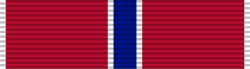
| Bronze Star |
{{Needs source}}, or explain disagreements on talk. Baseline import notes: About the data.
Manfred A. Isserman (1920–2012) was a United States Army Private First Class who trained at Camp Ritchie, Maryland, in Class 16. Manfred enlisted at New York City, New York.
Biography[edit | edit source]
Manfred “Fred” Alexander Isserman was born on 10 June 1920 in Berlin, Germany. He married his school sweetheart, Ellen Kann, on 14 April 1939, and the couple escaped to England before emigrating to the United States in May 1940.
Isserman entered the Army in February 1943, initially serving in the Medical Corps before transferring to military intelligence at Camp Ritchie (Class 16). An interrogator with 12th Army Group, he landed in Normandy about four weeks after D-Day, questioned German military personnel and suspected spies, and served from France and Luxembourg through Germany. He entered Berlin with the 2nd Armored Division and ended the war as a master sergeant. Selected for war-crimes work, he became chief interrogator for the Krupp case at Nuremberg. His Army decorations included the Bronze Star.
Isserman continued in American intelligence, becoming a principal architect of U.S. human-intelligence operations in Europe and retiring in 1976 as director of operations for the 66th Military Intelligence Group in Munich. He died in Urbana, Illinois, on 18 June 2012.
Research notes[edit | edit source]
- DEML
- Isserman's first-person oral history gives February 1943 for Army entry; the obituary's 1941 statement conflicts and is not used. Private address and family-survivor details are omitted.
Gallery[edit | edit source]
After you are autoconfirmed, upload a photo and add [[File:Example.jpg|thumb|caption]] here, or set |photo=Example.jpg in the infobox.
Technical record[edit | edit source]
| Field | Imported value |
|---|---|
| Approx Age at Death | 92 |
| Nara ASN | 32872790 |
| Nara Name | ISSERMAN MANFRED A |
| Nara State | 23 |
| Nara County | 81 |
| Nara POE | 2364 |
| Nara DOE | 240443 |
| Nara Grade Alpha | PVT |
| Nara Grade Code | 8 |
| Nara Branch Alpha | NO |
| Nara Branch Code | 2 |
| Branch | No branch assignment |
| Nara Term or Enlistment | 5 |
| Term of enlistment | Enlistment for the duration of the War or other emergency, plus six months, subject to the discretion of the President or otherwise according to law |
| Defer. Date | 0 |
| Nara Source | 0 |
| Nara Nativity | N1 |
| Nara Year of Birth | 20 |
| Nara Race | J |
| Nara Race Description | White not yet a citizen |
| Nara Education | 4 |
| Nara Civilian Occupation | 900 |
| Nara Marital Status | 2 |
| Nara Height (inches) | 26 |
| Nara Weight (lbs) | 140 |
| Class_ASN | 32872790 |
| Class_Name | ISSERMAN, Manfred A. |
| match_method | asn_exact_name_exact |
| row_source | both |
Timeline[edit | edit source]
- 10 June 1920 — Born in Berlin, Germany.
- 14 April 1939 — Married Ellen Kann; the couple escaped Germany for England.
- May 1940 — Arrived in the United States.
- February 1943 — Entered the Army and later transferred to Camp Ritchie military-intelligence training (Class 16).
- 1944–1945 — Served as an interrogator with 12th Army Group from Normandy through Germany.
- 1945 — Entered Berlin with the 2nd Armored Division and joined the Krupp war-crimes investigation.
- 1946 — Returned to Nuremberg as a civilian interrogator for the Krupp case.
- 1976 — Retired as director of operations for the 66th Military Intelligence Group.
- 18 June 2012 — Died in Urbana, Illinois.
Sources[edit | edit source]
- Isserman, Manfred A. [Witnesses to Nuremberg] — Archives & Special Collections at the Thomas J. Dodd Research Center, University of Connecticut Library (Center for Oral History; 21 June 1995)
- News-Gazette, 21 June 2012 — Manfred Alexander Isserman obituary (RB Archive ProQuest copy)
- Camp Ritchie Museum, Inc. (The Ritchie History Museum), Classes 1–31 roster data
- Dan Gross research spreadsheets, including original Excel timeline/roster work, combined with other research and records
- NARA World War II Army enlistment records (where a NARA ASN is present)
- 1940 U.S. Census (where a census match is present)