Soft launch: Soldier biographies and research notes vary in completeness. Prefer class-roster, NARA, newspapers, and other cited sources for contested facts — treat Research notes as leads, not settled history. Anyone can correct a page; contact us with questions.
Eilts, Hermann Frederick (33358745): Difference between revisions
Enrich from Wikipedia: Hermann Eilts |
Biography enrichment from Wikipedia (merged with existing sources) |
||
| (7 intermediate revisions by the same user not shown) | |||
| Line 4: | Line 4: | ||
|surname=Eilts | |surname=Eilts | ||
|first=Hermann | |first=Hermann | ||
|middle= | |middle=Frederick | ||
|class_section=2 | |class_section=2 | ||
|class_rank= | |class_rank=Private | ||
|birth_year=1922 | |birth_year=1922 | ||
|death_year=2006 | |death_year=2006 | ||
|nativity= | |nativity=Germany | ||
|religion= | |religion=Protestant | ||
|enlistment_place=WILKES BARRE PENNSYLVANIA | |enlistment_place=WILKES BARRE PENNSYLVANIA | ||
|state=ALASKA | |state=ALASKA | ||
| Line 22: | Line 22: | ||
|class_number=6 | |class_number=6 | ||
|class_display=6 | |class_display=6 | ||
|birth_place=Weißenfels, Germany | |||
|birth_date=23 March 1922 | |||
|death_date=12 October 2006 | |||
|death_place=Wellesley, Massachusetts | |||
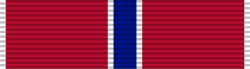
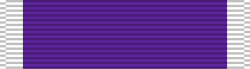
|awards=Bronze Star Medal; Purple Heart | |||
|awards_grid=Bronze Star Medal;;Purple Heart | |||
|awards_ribbons=Ribbon_Bronze_Star_Medal_ribbon.png; Ribbon_Purple_Heart_ribbon.png | |||
|awards_ribbon_rows=Ribbon_Bronze_Star_Medal_ribbon.png;;Ribbon_Purple_Heart_ribbon.png | |||
}} | }} | ||
<div class="soldier-lead"> | <div class="soldier-lead"> | ||
Hermann Frederick Eilts (March | '''Hermann Frederick Eilts''' (23 March 1922 – 12 October 2006) was a German-born Ritchie Boy who trained at [[Camp Ritchie]] in [[:Category:Class 6|Class 6]] and served with [[Team IPW 13|IPW Team 13]], and later a United States Foreign Service officer who was ambassador to Saudi Arabia and Egypt, assisted Henry Kissinger's Middle East shuttle diplomacy, and worked with Anwar Sadat throughout the Camp David negotiations. | ||
</div> | </div> | ||
== Biography == | == Biography == | ||
Hermann Frederick Eilts was born on 23 March 1922 in Weißenfels, Germany, immigrated with his Parents, Friedrion Eilts and Meta Eilts, to the United States as a child, and became a citizen at age 8 in 1930. He grew up in Scranton, Pennsylvania and graduated from Ursinus College in 1943. Eilts enlisted at Wilkes-Barre, Pennsylvania, trained at Camp Ritchie with [[:Category:Class 6|Class 6]], and served overseas in the Military Intelligence Corps with [[Team IPW 13|IPW Team 13]] during World War II, receiving the Bronze Star and the Purple Heart. | |||
After graduating with a master's degree from Johns Hopkins' School of Advanced International Studies in 1947, Eilts joined the foreign service. He would go on to be a diplomat for 32 years. He first served in Saudi Arabia when the kingdom had just learned to pump oil for the international market and later was U.S. Ambassador there during the 1967 Arab-Israeli Six-Day War. Eilts was one of only a few of the State Department's Arabist diplomats who did not advocate a blindly pro-Arab policy in the runup to that conflict, as he wrote cables saying that the views of other diplomats regarding hostile responses to a planned (later aborted) Western flotilla to re-open the Straits of Tiran to Israeli vessels were overstated because the Arab states lacked the materiel to counter such a move, and that forcing the Egyptians to back down here would reduce the risk of open warfare. He was appointed U.S. Ambassador to Egypt on 28 February 1974. He aided former Secretary of State Henry Kissinger during the 1974-75 period of shuttle diplomacy and became close to Egyptian President Anwar Sadat during the tense negotiations with Israel in 1977 and 1978. As Ambassador to Egypt, he was "considered by his American colleagues, Egyptian peers and Sadat as an extraordinarily talented diplomat." | |||
That alliance, as well as his standing as a leading American in the region, apparently prompted Libyan leader Muammar Gaddafi to send hit squads to Cairo in search of Mr. Eilts. U.S. Intelligence agencies discovered the plot, and President Jimmy Carter immediately warned Gaddafi that he would be held responsible if Mr. Eilts was harmed. | |||
After retiring from the foreign service, he joined the faculty of Boston University. In 1982, he established the Center of International Relations (CIR) at Boston University, which became the Department of International Relations in 1988, with Amb. Eilts as its founding chair. Later, this was to become the core of Boston University's new school of international affairs, the Frederick S. Pardee School of Global Studies, in 2014. In 1993 he became professor emeritus at Boston University. He was a charter member of the American Academy of Diplomacy and served on the board of trustees of the American University in Cairo. Eilts died at age 84 from complications of heart disease at his Wellesley, Massachusetts home on 12 October 2006. | |||
== Research notes == | == Research notes == | ||
| Line 107: | Line 119: | ||
== Sources == | == Sources == | ||
* [https://en.wikipedia.org/wiki/Hermann_Eilts Wikipedia: Hermann Eilts] | * [https://en.wikipedia.org/wiki/Hermann_Eilts Wikipedia: Hermann Eilts] | ||
* Camp Ritchie | * Camp Ritchie Museum, Inc. (The Ritchie History Museum), Classes 1–31 roster data | ||
* Dan Gross research spreadsheets, including original Excel timeline/roster work, combined with other research and records | |||
* NARA World War II Army enlistment records (where a NARA ASN is present) | * NARA World War II Army enlistment records (where a NARA ASN is present) | ||
* 1940 U.S. Census (where a census match is present) | * 1940 U.S. Census (where a census match is present) | ||
Latest revision as of 03:36, 25 September 2026
| Hermann Frederick Eilts | |
|---|---|
| Personal details | |
| Born | 23 March 1922 Weißenfels, Germany |
| Died | 12 October 2006 Wellesley, Massachusetts |
| Nativity | Germany |
| Religion | Protestant |
| Awards | Bronze Star Medal; Purple Heart |
| Military service | |
| Allegiance |  United States United States |
| Branch |  United States Army United States Army |
| ASN | 33358745 |
| Rank | Private |
| Camp Ritchie | Class 6 (13 March – 11 May 1943) |
| Section | 2 |
| Enlisted | Wilkes Barre, Pennsylvania |
| Team | IPW 13 |
|
|
| Bronze Star Medal | Purple Heart |
{{Needs source}}, or explain disagreements on talk. Baseline import notes: About the data.
Hermann Frederick Eilts (23 March 1922 – 12 October 2006) was a German-born Ritchie Boy who trained at Camp Ritchie in Class 6 and served with IPW Team 13, and later a United States Foreign Service officer who was ambassador to Saudi Arabia and Egypt, assisted Henry Kissinger's Middle East shuttle diplomacy, and worked with Anwar Sadat throughout the Camp David negotiations.
Biography[edit | edit source]
Hermann Frederick Eilts was born on 23 March 1922 in Weißenfels, Germany, immigrated with his Parents, Friedrion Eilts and Meta Eilts, to the United States as a child, and became a citizen at age 8 in 1930. He grew up in Scranton, Pennsylvania and graduated from Ursinus College in 1943. Eilts enlisted at Wilkes-Barre, Pennsylvania, trained at Camp Ritchie with Class 6, and served overseas in the Military Intelligence Corps with IPW Team 13 during World War II, receiving the Bronze Star and the Purple Heart.
After graduating with a master's degree from Johns Hopkins' School of Advanced International Studies in 1947, Eilts joined the foreign service. He would go on to be a diplomat for 32 years. He first served in Saudi Arabia when the kingdom had just learned to pump oil for the international market and later was U.S. Ambassador there during the 1967 Arab-Israeli Six-Day War. Eilts was one of only a few of the State Department's Arabist diplomats who did not advocate a blindly pro-Arab policy in the runup to that conflict, as he wrote cables saying that the views of other diplomats regarding hostile responses to a planned (later aborted) Western flotilla to re-open the Straits of Tiran to Israeli vessels were overstated because the Arab states lacked the materiel to counter such a move, and that forcing the Egyptians to back down here would reduce the risk of open warfare. He was appointed U.S. Ambassador to Egypt on 28 February 1974. He aided former Secretary of State Henry Kissinger during the 1974-75 period of shuttle diplomacy and became close to Egyptian President Anwar Sadat during the tense negotiations with Israel in 1977 and 1978. As Ambassador to Egypt, he was "considered by his American colleagues, Egyptian peers and Sadat as an extraordinarily talented diplomat."
That alliance, as well as his standing as a leading American in the region, apparently prompted Libyan leader Muammar Gaddafi to send hit squads to Cairo in search of Mr. Eilts. U.S. Intelligence agencies discovered the plot, and President Jimmy Carter immediately warned Gaddafi that he would be held responsible if Mr. Eilts was harmed.
After retiring from the foreign service, he joined the faculty of Boston University. In 1982, he established the Center of International Relations (CIR) at Boston University, which became the Department of International Relations in 1988, with Amb. Eilts as its founding chair. Later, this was to become the core of Boston University's new school of international affairs, the Frederick S. Pardee School of Global Studies, in 2014. In 1993 he became professor emeritus at Boston University. He was a charter member of the American Academy of Diplomacy and served on the board of trustees of the American University in Cairo. Eilts died at age 84 from complications of heart disease at his Wellesley, Massachusetts home on 12 October 2006.
Research notes[edit | edit source]
- FUSAG
- Also 5th Army
- Doc Team
Gallery[edit | edit source]
After you are autoconfirmed, upload a photo and add [[File:Example.jpg|thumb|caption]] here, or set |photo=Example.jpg in the infobox.
Technical record[edit | edit source]
| Field | Imported value |
|---|---|
| Approx Age at Death | 84 |
| Nara ASN | 33358745 |
| Nara Name | EILTS HERMANN F |
| Nara State | 2 |
| Nara County | 91 |
| Nara POE | 3931 |
| Nara DOE | 141142 |
| Nara Grade Alpha | PVT |
| Nara Grade Code | 8 |
| Nara Branch Alpha | BI |
| Nara Branch Code | 0 |
| Branch | Branch Immaterial - Warrant Officers, USA |
| Nara Term or Enlistment | 5 |
| Term of enlistment | Enlistment for the duration of the War or other emergency, plus six months, subject to the discretion of the President or otherwise according to law |
| Defer. Date | 0 |
| Nara Source | 0 |
| Nara Nativity | N1 |
| Nara Year of Birth | 22 |
| Nara Race | 1 |
| Nara Race Description | White citizen |
| Nara Education | 7 |
| Nara Civilian Occupation | 799 |
| Nara Marital Status | 6 |
| Nara Height (inches) | 72 |
| Nara Weight (lbs) | 167 |
| Class_ASN | 33358745 |
| Class_Name | EILTS, Hermann F. |
| match_method | asn_exact_name_exact |
| row_source | both |
Sources[edit | edit source]
- Wikipedia: Hermann Eilts
- Camp Ritchie Museum, Inc. (The Ritchie History Museum), Classes 1–31 roster data
- Dan Gross research spreadsheets, including original Excel timeline/roster work, combined with other research and records
- NARA World War II Army enlistment records (where a NARA ASN is present)
- 1940 U.S. Census (where a census match is present)