Soft launch: Soldier biographies and research notes vary in completeness. Prefer class-roster, NARA, newspapers, and other cited sources for contested facts — treat Research notes as leads, not settled history. Anyone can correct a page; contact us with questions.
Brombert, Victor Henri (32906913): Difference between revisions
Restore prior biography prose (rev 76814) and weave timeline facts |
Biography enrichment from Wikipedia (merged with existing sources) |
||
| (20 intermediate revisions by the same user not shown) | |||
| Line 8: | Line 8: | ||
|class_number=11 | |class_number=11 | ||
|class_section=5C | |class_section=5C | ||
|class_rank= | |class_rank=Private | ||
|birth_year=1923 | |birth_year=1923 | ||
|nativity=Germany | |nativity=Germany | ||
|religion=Jewish | |religion=Jewish | ||
|photo=Brombert, Victor (32906913) press TANGRAM.jpg | |||
|photo=Brombert, Victor (32906913).jpg | |||
|confidence=high | |confidence=high | ||
|class_display=11 | |class_display=11 | ||
| Line 26: | Line 20: | ||
|death_date=26 November 2024 | |death_date=26 November 2024 | ||
|death_year=2024 | |death_year=2024 | ||
|death_place=Princeton, New Jersey | |||
|death_place=Princeton, New Jersey | |||
|branch=United States Army | |branch=United States Army | ||
|battles=World War II | |battles=World War II | ||
|rank_final=Major | |rank_final=Major | ||
|birth_place=Berlin, Germany | |||
|teams=MII 423; MII 438-G | |||
}} | }} | ||
<div class="soldier-lead"> | <div class="soldier-lead"> | ||
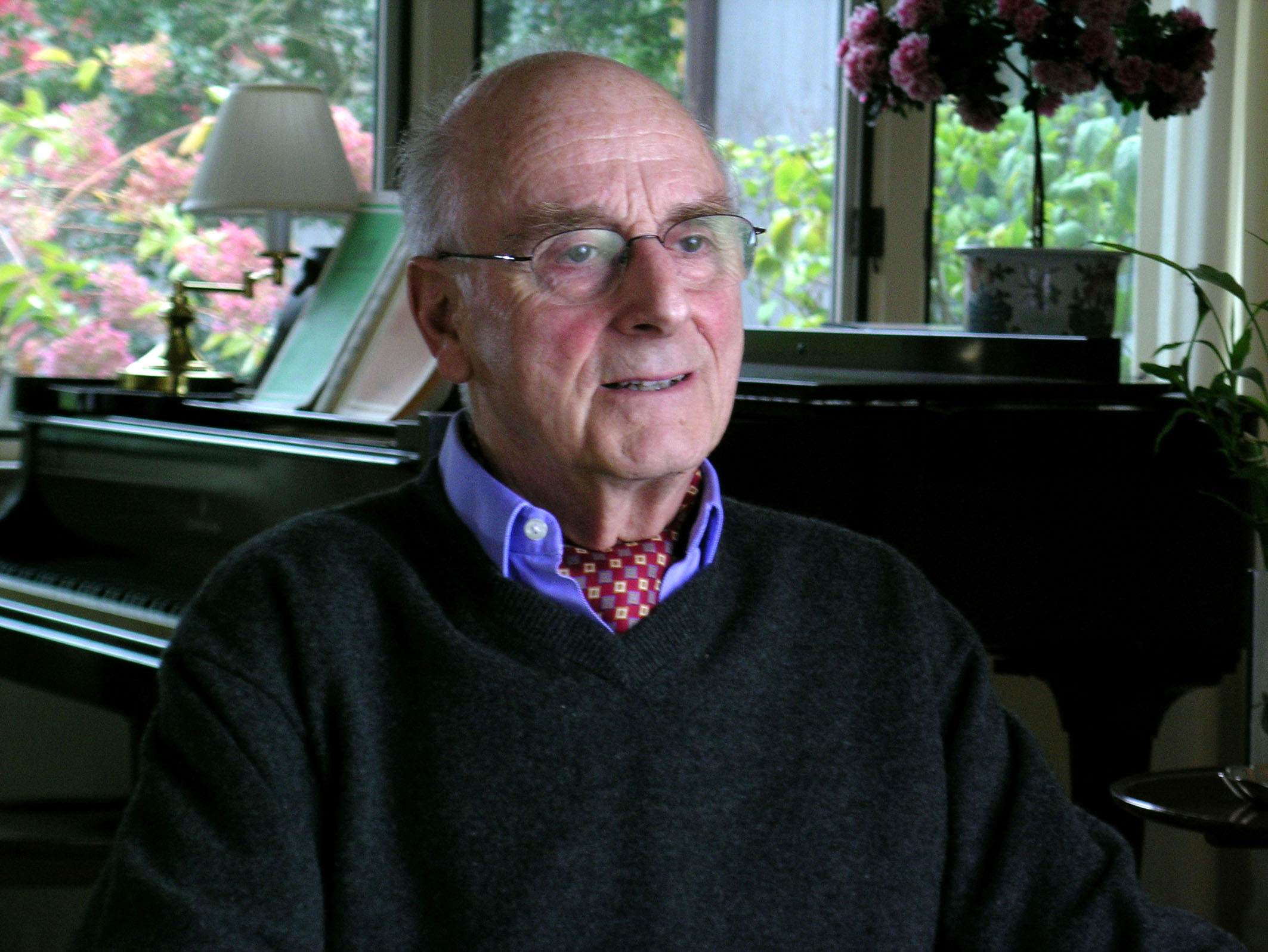
Victor Henri Brombert (né Bromberg; November | '''Victor Henri Brombert''' (né Bromberg; 11 November 1923–26 November 2024) was a Berlin-born U.S. Army interrogator associated with [[Camp Ritchie]]. He trained with [[:Category:Class 11|Class 11]], landed at Omaha Beach with [[Team MII 423|MII 423]] and the 2nd Armored Division, later served with [[Team MII 438-G|MII 438-G]] and the 28th Infantry Division, and after the war became Princeton's Henry Putnam University Professor of literature. | ||
</div> | </div> | ||
== Biography == | == Biography == | ||
Victor | Victor Henri Brombert was born Victor Henri Bromberg in Berlin on 11 November 1923 into a well-to-do Russian-Jewish family that had fled the Russian Revolution and settled in Germany. As a child he saw street fighting between Nazis and Communists, once while out with his nanny. After Hitler came to power in 1933, the family moved to France. Paris became his home; he attended the Lycée Janson-de-Sailly and later said he felt very French. In 1940, as the German army advanced, they fled the occupied zone across the Pyrenees into Spain. In 1941 he and his parents reached New York on a banana freighter after a six-week crossing that zigzagged to avoid U-boats. The ship carried some 1,200 refugees in space meant for a handful of passengers. Brombert later said they were "the bananas in the hold," with dysentery and deaths aboard; the press called the vessel a floating concentration camp. | ||
The Army drafted him in May 1943 in New York while he was not yet a citizen. Classified as an alien, he was at first barred from carrying a weapon and put with the medics, drilling as a litter bearer. He became a United States citizen that September and, during service, changed his surname from Bromberg to Brombert. Fluent in French, German, and Russian, he was sent to [[Camp Ritchie]]. Brombert trained as an interrogator with [[:Category:Class 11|Class 11]] (IPW Ge) and later called the post his first university. The trainees, he said, did not look like soldiers but knew Piero della Francesca and Mozart; the course covered German and Italian order of battle, aerial photographs, night navigation without a compass, interrogation, liaison with the French Resistance, and sentinel-neutralization techniques he never used in the field. | |||
He crossed to England with the 2nd Armored Division and landed in Normandy about two days after D-Day at Omaha Beach with [[Team MII 423|MII Team 423]]. The work was tactical: minefields, machine-gun nests, tank reserves, and troop positions, checked against prisoners and civilians who were often frightened or confused. He later described the Normandy beaches, burned tank crews, and the bombing around Saint-Lô as a lunar landscape. After a night under fire on the bluffs above Omaha Beach, he told himself that if he survived he would not complain, would try to give pleasure to others, and would win the war without loving it. Brombert fought in France and was in Paris at the liberation. He later served with [[Team MII 438-G|MII 438-G]] and the 28th Infantry Division in the Hürtgen Forest and during the Battle of the Bulge. He offered cigarettes and avoided threats in interrogation, except with hardened SS men. | |||
After Germany's surrender he worked as an interpreter and interrogator on denazification in Germany. He found Germans reluctant to denounce one another. Occupation authorities sometimes left Nazi officials in place to keep cities running, a compromise he later described with frustration. He also saw displaced-persons camps: German refugees from the east, and Jewish survivors who returned to find their houses occupied, some of them shot at when they tried to reclaim a home. He left the Army at the end of 1946. | |||
Brombert studied at Yale University, earning a bachelor's degree in 1948 and a doctorate in Romance languages and literatures in 1953; a Fulbright fellowship in Rome in 1950–51 added Italian to his languages. He married the translator and biographer Beth Archer in 1950. He joined Yale's Department of Romance Languages and Literatures, chaired it from 1964 to 1973, and was named Benjamin F. Barge Professor in 1968. In 1975 he moved to Princeton as Henry Putnam University Professor in comparative literature and Romance languages, where he also directed the Christian Gauss Seminars in Criticism and chaired the Council of the Humanities; he became emeritus in 1999. He taught as a visiting professor at universities including Berkeley, Johns Hopkins, Columbia, the Scuola Normale Superiore in Pisa, and the Collège de France, and served as president of the Modern Language Association in 1988–89. His honors included two Guggenheim fellowships, election to the American Academy of Arts and Sciences (1974) and the American Philosophical Society (1987), Yale's Wilbur Cross Medal (1985), and appointment as Commandeur des Palmes Académiques (2008) and Chevalier of the Légion d'honneur (2009). For decades he kept wartime service out of the classroom—he was supposed to talk about Stendhal, he later said, not about the war—and students learned of it only years afterward; in 2021, at 97, he was among the surviving Ritchie Boys featured on ''60 Minutes''. His memoir ''Trains of Thought'' appeared in 2002. He died at his home in Princeton, New Jersey, on 26 November 2024, at the age of 101. | |||
== Research notes == | == Research notes == | ||
| Line 46: | Line 47: | ||
* Ritchie Boy | * Ritchie Boy | ||
* 2nd Armd | * 2nd Armd | ||
* Fr 423 | * Fr 423 | ||
* Professor Emeritus, Princeton | * Professor Emeritus, Princeton | ||
* Author, | * Author, | ||
* Trains of Thought | |||
== Gallery == | == Gallery == | ||
<div class="soldier-gallery"> | |||
<gallery mode="packed" heights="140px"> | |||
Brombert, Victor (32906913).jpg|Earlier profile photograph (retained after press-photo update) | |||
</gallery> | |||
</div> | |||
== Technical record == | == Technical record == | ||
| Line 121: | Line 124: | ||
<div class="mw-collapsible mw-collapsed soldier-timeline"> | <div class="mw-collapsible mw-collapsed soldier-timeline"> | ||
<div class="soldier-timeline-body"> | <div class="soldier-timeline-body"> | ||
* 23 August 1943 Assigned to Company F at Camp Ritchie. | * 11 November 1923 — Born Victor Henri Bromberg in Berlin. | ||
* | * 1933 — Family left Germany for France; Paris became his home. | ||
* 30 March 1944 MII Team 423 attached to HQ, 2nd Armored Division (1st Army) | * 1940 — Family fled occupied France across the Pyrenees into Spain. | ||
* 30 September 1944 MII Team 423 placed on 30-day duty with CIC Detachment 417 | * 1941 — Reached New York on a banana freighter after a six-week crossing. | ||
* | * Late 1943 — Shipped to England with the 2nd Armored Division. | ||
* 25 June 1945 | * May 1943 — Drafted in New York as a non-citizen; first assigned to the medics as a litter bearer. | ||
* | * 23 August 1943 — Assigned to Company F at Camp Ritchie. | ||
* | * 9 September 1943 — Became a United States citizen. | ||
* | * 23 October 1943 — Graduated Class 11 (IPW Ge). Certificate No. 3780. | ||
* | * 15 December 1943 — Promoted from private to master sergeant. | ||
* | * Summer 1944 — Later described the bombing around Saint-Lô. | ||
* | * Fall 1944 — Served with the 28th Infantry Division in the Hürtgen Forest. | ||
* 30 March 1944 — MII Team 423 attached to HQ, 2nd Armored Division (1st Army). | |||
* June 1944 — Landed in Normandy about two days after D-Day at Omaha Beach. | |||
* August 1944 — In Paris at the liberation. | |||
* 30 September 1944 — MII Team 423 placed on 30-day duty with CIC Detachment 417. | |||
* 18 October 1944 — MII Team 438-G attached to the 28th Infantry Division (V Corps, 1st Army). | |||
* December 1944 – January 1945 — Battle of the Bulge. | |||
* 1945–1946 — Denazification and displaced-persons work in Germany. | |||
* 25 June 1945 — Assigned to MII Team 438-G attached to HQ, 15th Army. | |||
* Late 1946 — Left the Army and returned to the United States. | |||
* 1948 — Bachelor's degree, Yale University. | |||
* 1950 — Married Beth Archer. | |||
* 1950–1951 — Fulbright fellowship in Rome. | |||
* 1953 — Doctorate in Romance languages and literatures, Yale. | |||
* 1964–1973 — Chaired Yale's Department of Romance Languages and Literatures. | |||
* 1975 — Appointed Henry Putnam University Professor at Princeton. | |||
* 1988 — 1989 President of the Modern Language Association. | |||
* 1999 — Entered emeritus status at Princeton. | |||
* 2002 — Published the memoir Trains of Thought. | |||
* 2009 — Named Chevalier of the Légion d'honneur. | |||
* 26 November 2024 — Died in Princeton, New Jersey. | |||
</div> | </div> | ||
</div><div style="clear: both;"></div> | </div><div style="clear: both;"></div> | ||
== Sources == | == Sources == | ||
* [https://www.nytimes.com/2024/12/12/books/victor-brombert-dead.html New York Times obituary (12 December 2024)] | |||
* [https://paw.princeton.edu/article/ritchie-boy Princeton Alumni Weekly, "A Ritchie Boy" (21 October 2021)] | |||
* [[Ritchie Boy Interviews#Victor Brombert|American Veterans Center interview (watchlist card)]] | |||
* [https://www.youtube.com/watch?v=wzyTmmSxoK0 American Veterans Center interview with Victor Brombert on YouTube] | |||
* [https://en.wikipedia.org/wiki/Victor_Brombert Wikipedia: Victor Brombert] | * [https://en.wikipedia.org/wiki/Victor_Brombert Wikipedia: Victor Brombert] | ||
* Camp Ritchie Museum, Inc. (The Ritchie History Museum), Classes 1–31 roster data | * Camp Ritchie Museum, Inc. (The Ritchie History Museum), Classes 1–31 roster data | ||
| Line 144: | Line 172: | ||
* Dan Gross, ''Timeline of Victor H. Brombert for Camp Ritchie'' (private research document; 1 source documents reviewed) | * Dan Gross, ''Timeline of Victor H. Brombert for Camp Ritchie'' (private research document; 1 source documents reviewed) | ||
* Dan Gross, ''Timeline of Brombert, Victor H. for Camp Ritchie'' (private research files; selected non-private narrative findings; 1 source files: VICTOR BROMBERT (2021).doc) | * Dan Gross, ''Timeline of Brombert, Victor H. for Camp Ritchie'' (private research files; selected non-private narrative findings; 1 source files: VICTOR BROMBERT (2021).doc) | ||
* [https://ritchieboys.com/EN/boys_brombert.html The Ritchie Boys: Victor Brombert] | |||
* [https://ritchieboys.com/EN/press_photos.html The Ritchie Boys film site — press photos] (© TANGRAM (Harald Stuckmann); high-res https://ritchieboys.com/DL/photos-highq/boys/brombert.jpg) | |||
Latest revision as of 03:35, 25 September 2026
| Victor Henri Brombert | |
|---|---|
_press_TANGRAM.jpg) | |
| Personal details | |
| Birth name | Victor Henri Bromberg |
| Born | 11 November 1923 Berlin, Germany |
| Died | 26 November 2024 Princeton, New Jersey |
| Nativity | Germany |
| Religion | Jewish |
| Military service | |
| Allegiance |  United States United States |
| Branch |  United States Army United States Army |
| ASN | 32906913 |
| Rank | Major |
| Rank at Ritchie | Private |
| Camp Ritchie | Class 11 (25 August – 23 October 1943) |
| Section | 5C |
| Battles / wars | World War II |
| Teams | MII 423-G, MII 438-G |
{{Needs source}}, or explain disagreements on talk. Baseline import notes: About the data.
Victor Henri Brombert (né Bromberg; 11 November 1923–26 November 2024) was a Berlin-born U.S. Army interrogator associated with Camp Ritchie. He trained with Class 11, landed at Omaha Beach with MII 423 and the 2nd Armored Division, later served with MII 438-G and the 28th Infantry Division, and after the war became Princeton's Henry Putnam University Professor of literature.
Biography[edit | edit source]
Victor Henri Brombert was born Victor Henri Bromberg in Berlin on 11 November 1923 into a well-to-do Russian-Jewish family that had fled the Russian Revolution and settled in Germany. As a child he saw street fighting between Nazis and Communists, once while out with his nanny. After Hitler came to power in 1933, the family moved to France. Paris became his home; he attended the Lycée Janson-de-Sailly and later said he felt very French. In 1940, as the German army advanced, they fled the occupied zone across the Pyrenees into Spain. In 1941 he and his parents reached New York on a banana freighter after a six-week crossing that zigzagged to avoid U-boats. The ship carried some 1,200 refugees in space meant for a handful of passengers. Brombert later said they were "the bananas in the hold," with dysentery and deaths aboard; the press called the vessel a floating concentration camp.
The Army drafted him in May 1943 in New York while he was not yet a citizen. Classified as an alien, he was at first barred from carrying a weapon and put with the medics, drilling as a litter bearer. He became a United States citizen that September and, during service, changed his surname from Bromberg to Brombert. Fluent in French, German, and Russian, he was sent to Camp Ritchie. Brombert trained as an interrogator with Class 11 (IPW Ge) and later called the post his first university. The trainees, he said, did not look like soldiers but knew Piero della Francesca and Mozart; the course covered German and Italian order of battle, aerial photographs, night navigation without a compass, interrogation, liaison with the French Resistance, and sentinel-neutralization techniques he never used in the field.
He crossed to England with the 2nd Armored Division and landed in Normandy about two days after D-Day at Omaha Beach with MII Team 423. The work was tactical: minefields, machine-gun nests, tank reserves, and troop positions, checked against prisoners and civilians who were often frightened or confused. He later described the Normandy beaches, burned tank crews, and the bombing around Saint-Lô as a lunar landscape. After a night under fire on the bluffs above Omaha Beach, he told himself that if he survived he would not complain, would try to give pleasure to others, and would win the war without loving it. Brombert fought in France and was in Paris at the liberation. He later served with MII 438-G and the 28th Infantry Division in the Hürtgen Forest and during the Battle of the Bulge. He offered cigarettes and avoided threats in interrogation, except with hardened SS men.
After Germany's surrender he worked as an interpreter and interrogator on denazification in Germany. He found Germans reluctant to denounce one another. Occupation authorities sometimes left Nazi officials in place to keep cities running, a compromise he later described with frustration. He also saw displaced-persons camps: German refugees from the east, and Jewish survivors who returned to find their houses occupied, some of them shot at when they tried to reclaim a home. He left the Army at the end of 1946.
Brombert studied at Yale University, earning a bachelor's degree in 1948 and a doctorate in Romance languages and literatures in 1953; a Fulbright fellowship in Rome in 1950–51 added Italian to his languages. He married the translator and biographer Beth Archer in 1950. He joined Yale's Department of Romance Languages and Literatures, chaired it from 1964 to 1973, and was named Benjamin F. Barge Professor in 1968. In 1975 he moved to Princeton as Henry Putnam University Professor in comparative literature and Romance languages, where he also directed the Christian Gauss Seminars in Criticism and chaired the Council of the Humanities; he became emeritus in 1999. He taught as a visiting professor at universities including Berkeley, Johns Hopkins, Columbia, the Scuola Normale Superiore in Pisa, and the Collège de France, and served as president of the Modern Language Association in 1988–89. His honors included two Guggenheim fellowships, election to the American Academy of Arts and Sciences (1974) and the American Philosophical Society (1987), Yale's Wilbur Cross Medal (1985), and appointment as Commandeur des Palmes Académiques (2008) and Chevalier of the Légion d'honneur (2009). For decades he kept wartime service out of the classroom—he was supposed to talk about Stendhal, he later said, not about the war—and students learned of it only years afterward; in 2021, at 97, he was among the surviving Ritchie Boys featured on 60 Minutes. His memoir Trains of Thought appeared in 2002. He died at his home in Princeton, New Jersey, on 26 November 2024, at the age of 101.
Research notes[edit | edit source]
- Also 28th Inf Div (MII 438-G)
- Ritchie Boy
- 2nd Armd
- Fr 423
- Professor Emeritus, Princeton
- Author,
- Trains of Thought
Gallery[edit | edit source]
-
 Earlier profile photograph (retained after press-photo update)
.jpg)
Technical record[edit | edit source]
| Field | Imported value |
|---|---|
| Nara ASN | 32906913 |
| Nara Name | BROMBERT VICTOR H |
| Nara State | 23 |
| Nara County | 61 |
| Nara POE | 2364 |
| Nara DOE | 130543 |
| Nara Grade Alpha | PVT |
| Nara Grade Code | 8 |
| Nara Branch Alpha | NO |
| Nara Branch Code | 2 |
| Branch | No branch assignment |
| Nara Term or Enlistment | 5 |
| Term of enlistment | Enlistment for the duration of the War or other emergency, plus six months, subject to the discretion of the President or otherwise according to law |
| Defer. Date | 0 |
| Nara Source | 0 |
| Nara Nativity | N1 |
| Nara Year of Birth | 23 |
| Nara Race | J |
| Nara Race Description | White not yet a citizen |
| Nara Education | 5 |
| Nara Civilian Occupation | 50 |
| Nara Marital Status | 6 |
| Nara Height (inches) | 0 |
| Nara Weight (lbs) | 117 |
| Class_ASN | 32906913 |
| Class_Name | Brombert, Victor H. |
| match_method | asn_exact_name_exact |
| row_source | both |
Timeline[edit | edit source]
- 11 November 1923 — Born Victor Henri Bromberg in Berlin.
- 1933 — Family left Germany for France; Paris became his home.
- 1940 — Family fled occupied France across the Pyrenees into Spain.
- 1941 — Reached New York on a banana freighter after a six-week crossing.
- Late 1943 — Shipped to England with the 2nd Armored Division.
- May 1943 — Drafted in New York as a non-citizen; first assigned to the medics as a litter bearer.
- 23 August 1943 — Assigned to Company F at Camp Ritchie.
- 9 September 1943 — Became a United States citizen.
- 23 October 1943 — Graduated Class 11 (IPW Ge). Certificate No. 3780.
- 15 December 1943 — Promoted from private to master sergeant.
- Summer 1944 — Later described the bombing around Saint-Lô.
- Fall 1944 — Served with the 28th Infantry Division in the Hürtgen Forest.
- 30 March 1944 — MII Team 423 attached to HQ, 2nd Armored Division (1st Army).
- June 1944 — Landed in Normandy about two days after D-Day at Omaha Beach.
- August 1944 — In Paris at the liberation.
- 30 September 1944 — MII Team 423 placed on 30-day duty with CIC Detachment 417.
- 18 October 1944 — MII Team 438-G attached to the 28th Infantry Division (V Corps, 1st Army).
- December 1944 – January 1945 — Battle of the Bulge.
- 1945–1946 — Denazification and displaced-persons work in Germany.
- 25 June 1945 — Assigned to MII Team 438-G attached to HQ, 15th Army.
- Late 1946 — Left the Army and returned to the United States.
- 1948 — Bachelor's degree, Yale University.
- 1950 — Married Beth Archer.
- 1950–1951 — Fulbright fellowship in Rome.
- 1953 — Doctorate in Romance languages and literatures, Yale.
- 1964–1973 — Chaired Yale's Department of Romance Languages and Literatures.
- 1975 — Appointed Henry Putnam University Professor at Princeton.
- 1988 — 1989 President of the Modern Language Association.
- 1999 — Entered emeritus status at Princeton.
- 2002 — Published the memoir Trains of Thought.
- 2009 — Named Chevalier of the Légion d'honneur.
- 26 November 2024 — Died in Princeton, New Jersey.
Sources[edit | edit source]
- New York Times obituary (12 December 2024)
- Princeton Alumni Weekly, "A Ritchie Boy" (21 October 2021)
- American Veterans Center interview (watchlist card)
- American Veterans Center interview with Victor Brombert on YouTube
- Wikipedia: Victor Brombert
- Camp Ritchie Museum, Inc. (The Ritchie History Museum), Classes 1–31 roster data
- Dan Gross research spreadsheets, including original Excel timeline/roster work, combined with other research and records
- NARA World War II Army enlistment records (where a NARA ASN is present)
- 1940 U.S. Census (where a census match is present)
- Dan Gross, Timeline of Victor H. Brombert for Camp Ritchie (private research document; 1 source documents reviewed)
- Dan Gross, Timeline of Brombert, Victor H. for Camp Ritchie (private research files; selected non-private narrative findings; 1 source files: VICTOR BROMBERT (2021).doc)
- The Ritchie Boys: Victor Brombert
- The Ritchie Boys film site — press photos (© TANGRAM (Harald Stuckmann); high-res https://ritchieboys.com/DL/photos-highq/boys/brombert.jpg)