Soft launch: Soldier biographies and research notes vary in completeness. Prefer class-roster, NARA, newspapers, and other cited sources for contested facts — treat Research notes as leads, not settled history. Anyone can correct a page; contact us with questions.
Uebel, Martin A. (01184744): Difference between revisions
Link other Ritchie Boys named in Facebook bio/gallery captions |
Link Camp Ritchie class and team mentions in lead/biography |
||
| (11 intermediate revisions by the same user not shown) | |||
| Line 7: | Line 7: | ||
|class_section=5B | |class_section=5B | ||
|class_rank=2nd Lt | |class_rank=2nd Lt | ||
|birth_year=1912 | |birth_year=1912 | ||
|death_year=2008 | |death_year=2008 | ||
|nativity= | |nativity=United States | ||
|religion= | |religion=Protestant | ||
|ipw_ge=38 | |ipw_ge=38 | ||
|overseas=Y | |overseas=Y | ||
| Line 18: | Line 17: | ||
|class_number=11 | |class_number=11 | ||
|class_display=11 | |class_display=11 | ||
|birth_place=East Hampton, Massachusetts | |||
|arm_or_service=Field Artillery | |||
|birth_date=12 April 1912 | |||
|teams=MII 423-G | |||
|rank_final=Second Lieutenant | |||
|awards=Purple Heart | |||
|awards_grid=Purple Heart | |||
|awards_ribbons=Ribbon_Purple_Heart_ribbon.png | |||
|awards_ribbon_rows=Ribbon_Purple_Heart_ribbon.png | |||
}} | }} | ||
<div class="soldier-lead"> | <div class="soldier-lead"> | ||
'''[[Uebel, Martin A. (01184744)|Martin A. Uebel]]''' (1912–2008) was a Ritchie Boy (from United States; Protestant) who trained at Camp Ritchie in class 11 and served with IPW Team 38. | '''[[Uebel, Martin A. (01184744)|Martin A. Uebel]]''' (1912–2008) was a Ritchie Boy (from United States; Protestant) who trained at Camp Ritchie in [[:Category:Class 11|class 11]] and served with [[Team IPW 38|IPW Team 38]]. | ||
</div> | </div> | ||
== Biography == | == Biography == | ||
Martin A. Uebel was born on 12 April 1912 in East Hampton, Massachusetts. He graduated from Dartmouth College in 1933, worked as a musician, and taught English in Germany before returning to the United States as war approached. He then taught German at Culver Military Academy. | |||
Drafted in 1942, Uebel trained at Fort Sill and was commissioned a second lieutenant. His German fluency led to reassignment to Camp Ritchie ([[:Category:Class 11|Class 11]]), where he learned prisoner interrogation and German order of battle. Serving as an interpreter in Europe, he landed in Normandy and questioned German prisoners. A mortar attack seriously wounded him during the Normandy campaign; after returning to duty, enemy fire struck him again near Trier. He received two Purple Hearts. | |||
Uebel married Ruth in 1945 and resumed teaching German, Latin, and English at Culver Military Academy, where he also worked in ROTC and music programs until retiring in 1977. He remained active in veterans, church, and community organizations and died in 2008. | |||
== Research notes == | == Research notes == | ||
* | * The article explicitly identifies two Purple Hearts. The awards tuple uses one canonical Purple Heart ribbon rather than duplicating the ribbon. | ||
== Technical record == | == Technical record == | ||
| Line 45: | Line 58: | ||
| row_source || both | | row_source || both | ||
|} | |} | ||
== Timeline == | |||
<div class="mw-collapsible mw-collapsed soldier-timeline"> | |||
<div class="soldier-timeline-body"> | |||
* 12 April 1912 — Born in East Hampton, Massachusetts. | |||
* 1933 — Graduated from Dartmouth College. | |||
* 1935–1939 — Taught English in Germany. | |||
* 1942 — Drafted into the Army; trained at Fort Sill and Camp Ritchie (Class 11). | |||
* 1944 — Landed in Normandy as an interpreter and prisoner interrogator; wounded by a mortar attack. | |||
* 1944–1945 — Returned to duty and was wounded a second time near Trier. | |||
* 1945 — Married Ruth and resumed teaching at Culver Military Academy. | |||
* 1977 — Retired from Culver Military Academy. | |||
* 2008 — Died. | |||
</div> | |||
</div><div style="clear: both;"></div> | |||
== Sources == | == Sources == | ||
* Camp Ritchie | * [https://www.legacy.com/us/obituaries/southbendtribune/name/martin-uebel-obituary?id=35291792 South Bend Tribune — Martin Uebel obituary] | ||
* ''South Bend Tribune'', 8 November 2006 — “Memories of war; German heritage came in handy as Martin Uebel served as translator” (RB Archive ProQuest copy) | |||
* Camp Ritchie Museum, Inc. (The Ritchie History Museum), Classes 1–31 roster data | |||
* Dan Gross research spreadsheets, including original Excel timeline/roster work, combined with other research and records | |||
* NARA World War II Army enlistment records (where a NARA ASN is present) | * NARA World War II Army enlistment records (where a NARA ASN is present) | ||
* 1940 U.S. Census (where a census match is present) | * 1940 U.S. Census (where a census match is present) | ||
* Ritchie Boys of WWII Facebook page, post dated 2023-01-13 (1 post) | * Ritchie Boys of WWII Facebook page, post dated 2023-01-13 (1 post) | ||
Latest revision as of 00:22, 19 September 2026
| Martin A. Uebel | |
|---|---|
| Personal details | |
| Born | 12 April 1912 East Hampton, Massachusetts |
| Died | 2008 |
| Nativity | United States |
| Religion | Protestant |
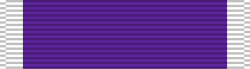
| Awards | Purple Heart |
| Military service | |
| Allegiance |  United States United States |
| Branch |  United States Army United States Army |
| Arm / service | Field Artillery |
| ASN | 01184744 |
| Rank | Second Lieutenant |
| Camp Ritchie | Class 11 (25 August – 23 October 1943) |
| Section | 5B |
| Teams | IPW 38, MII 423-G |
|
| Purple Heart |
{{Needs source}}, or explain disagreements on talk. Baseline import notes: About the data.
Martin A. Uebel (1912–2008) was a Ritchie Boy (from United States; Protestant) who trained at Camp Ritchie in class 11 and served with IPW Team 38.
Biography[edit | edit source]
Martin A. Uebel was born on 12 April 1912 in East Hampton, Massachusetts. He graduated from Dartmouth College in 1933, worked as a musician, and taught English in Germany before returning to the United States as war approached. He then taught German at Culver Military Academy.
Drafted in 1942, Uebel trained at Fort Sill and was commissioned a second lieutenant. His German fluency led to reassignment to Camp Ritchie (Class 11), where he learned prisoner interrogation and German order of battle. Serving as an interpreter in Europe, he landed in Normandy and questioned German prisoners. A mortar attack seriously wounded him during the Normandy campaign; after returning to duty, enemy fire struck him again near Trier. He received two Purple Hearts.
Uebel married Ruth in 1945 and resumed teaching German, Latin, and English at Culver Military Academy, where he also worked in ROTC and music programs until retiring in 1977. He remained active in veterans, church, and community organizations and died in 2008.
Research notes[edit | edit source]
- The article explicitly identifies two Purple Hearts. The awards tuple uses one canonical Purple Heart ribbon rather than duplicating the ribbon.
Technical record[edit | edit source]
| Field | Imported value |
|---|---|
| Approx Age at Death | 96 |
| Class_ASN | 184744 |
| Class_Name | UEBEL, Martin A. |
| match_method | asn_partial_name_exact |
| row_source | both |
Timeline[edit | edit source]
- 12 April 1912 — Born in East Hampton, Massachusetts.
- 1933 — Graduated from Dartmouth College.
- 1935–1939 — Taught English in Germany.
- 1942 — Drafted into the Army; trained at Fort Sill and Camp Ritchie (Class 11).
- 1944 — Landed in Normandy as an interpreter and prisoner interrogator; wounded by a mortar attack.
- 1944–1945 — Returned to duty and was wounded a second time near Trier.
- 1945 — Married Ruth and resumed teaching at Culver Military Academy.
- 1977 — Retired from Culver Military Academy.
- 2008 — Died.
Sources[edit | edit source]
- South Bend Tribune — Martin Uebel obituary
- South Bend Tribune, 8 November 2006 — “Memories of war; German heritage came in handy as Martin Uebel served as translator” (RB Archive ProQuest copy)
- Camp Ritchie Museum, Inc. (The Ritchie History Museum), Classes 1–31 roster data
- Dan Gross research spreadsheets, including original Excel timeline/roster work, combined with other research and records
- NARA World War II Army enlistment records (where a NARA ASN is present)
- 1940 U.S. Census (where a census match is present)
- Ritchie Boys of WWII Facebook page, post dated 2023-01-13 (1 post)