Soft launch: Soldier biographies and research notes vary in completeness. Prefer class-roster, NARA, newspapers, and other cited sources for contested facts — treat Research notes as leads, not settled history. Anyone can correct a page; contact us with questions.
Wald, Henry W. (37457978): Difference between revisions
Move opening paragraph onto page for visual editing |
Publish Facebook post enrichment (lead/bio/fields/gallery) |
||
| Line 8: | Line 8: | ||
|nativity=Ge | |nativity=Ge | ||
|religion=J | |religion=J | ||
|photo=1472064868291102.jpg | |||
|caption=Henry Wald (born as Heinz Werner Schőnwald) poses in his Army uniform, circa 1943. | |||
}} | }} | ||
<div class="soldier-lead"> | <div class="soldier-lead"> | ||
'''Henry W. Wald''' (born 1912) was a | '''Henry W. Wald''' (born 1912) was a Ritchie Boy (from Germany; Jewish) who trained at Camp Ritchie. | ||
</div> | </div> | ||
== Biography == | == Biography == | ||
Henry Wald, born as Heinz Werner Schőnwald in 1912, is among the thousands of Ritchie Boys who started life in Germany – and whose Army service, including time at Camp Ritchie, is still somewhat undefined. Wald grew up in the small town of Großröhrsdorf. After high school, he pursued several advanced programs in business and served as the junior manager of the department store owned by his parents. After the Nazis came to power in 1933, he was arrested by the local police for a “race crime.” He fled his hometown, lived briefly in Berlin until 1938, and then left Germany for New York in March 1939. Though technically an enemy alien, Henry volunteered for the Army two years after arriving in the U.S. and was inducted at Fort Francis E. Warren in Wyoming in November 1942. He was transferred to Camp Sill in Oklahoma and was granted American citizenship after completing Basic Training there. Henry was then transferred to the Army Specialized Training Program at Stanford University in Palo Alto, California, where he joined a cohort of 25-30 fellow German Jewish refugees. In addition to courses on world history and advanced German, his curriculum included a course on interrogating people accused of crimes. Before he completed his coursework, he and his Stanford colleagues were transferred to Camp Ritchie in October 1943. Due to various medical issues and, likely, to his age, he was granted an honorable discharge and returned to Lincoln, Nebraska, where he had lived for some years. But that’s not his full war story. Henry’s military assignments and service are still not fully defined. He spent just a year in the Army before his release, at Fort Sill, Stanford, and a very brief time at Camp Ritchie. Subsequent paperwork shows, however, that he performed the duties of a Ritchie Boy trainee while overseas. In the 21st century, a resident of Großröhrsdorf located two veterans of the German army, both of whom affirmed that they were interrogated by Henry Wald while Prisoners of War, one in Paris, the other in a small town near Großröhrsdorf. Despite considerable effort, Wald’s wartime activities have not been fully clarified, leaving it unclear how he was engaged in those interrogations. After the war, Henry returned to Nebraska, where he had been studying accounting at the university prior to his induction. He resumed his studies and continued to work for the Northwestern Metal Company, his first permanent employer in the U.S. Together with two other students, he formed an accounting practice. Henry’s clientele comprised mostly Jewish-owned firms in Lincoln and small agricultural operations in eastern Nebraska. He was active in the local Jewish community, serving for nearly 40 years as treasurer of the Lincoln Jewish Welfare Federation and president of the local Little League baseball organization. Wald's life and that of his family are chronicled in the book www.ghostsonthewallbook.com. | |||
== Research notes == | == Research notes == | ||
| Line 23: | Line 25: | ||
== Gallery == | == Gallery == | ||
<div class="soldier-gallery"> | |||
<gallery mode="packed" heights="140px"> | |||
1472064868291102.jpg|Henry Wald (born as Heinz Werner Schőnwald) poses in his Army uniform, circa 1943. | |||
1472064861624436.jpg|Wald, at right, with fellow GIs in front of an artillery emplacement. | |||
</gallery> | |||
</div> | |||
== Technical record == | == Technical record == | ||
| Line 37: | Line 44: | ||
* NARA World War II Army enlistment records (where a NARA ASN is present) | * NARA World War II Army enlistment records (where a NARA ASN is present) | ||
* 1940 U.S. Census (where a census match is present) | * 1940 U.S. Census (where a census match is present) | ||
* Ritchie Boys of WWII Facebook page, post dated 2026-07-13 (1 post) | |||
Revision as of 03:52, 26 August 2026
| Henry W. Wald | |
|---|---|
 Henry Wald (born as Heinz Werner Schőnwald) poses in his Army uniform, circa 1943. | |
| Personal details | |
| Born | 1912 |
| Nativity | Germany |
| Religion | Jewish |
| Military service | |
| Allegiance |  United States United States |
| Branch |  United States Army United States Army |
| ASN | 37457978 |
{{Needs source}}, or explain disagreements on talk. Baseline import notes: About the data.
Henry W. Wald (born 1912) was a Ritchie Boy (from Germany; Jewish) who trained at Camp Ritchie.
Biography
Henry Wald, born as Heinz Werner Schőnwald in 1912, is among the thousands of Ritchie Boys who started life in Germany – and whose Army service, including time at Camp Ritchie, is still somewhat undefined. Wald grew up in the small town of Großröhrsdorf. After high school, he pursued several advanced programs in business and served as the junior manager of the department store owned by his parents. After the Nazis came to power in 1933, he was arrested by the local police for a “race crime.” He fled his hometown, lived briefly in Berlin until 1938, and then left Germany for New York in March 1939. Though technically an enemy alien, Henry volunteered for the Army two years after arriving in the U.S. and was inducted at Fort Francis E. Warren in Wyoming in November 1942. He was transferred to Camp Sill in Oklahoma and was granted American citizenship after completing Basic Training there. Henry was then transferred to the Army Specialized Training Program at Stanford University in Palo Alto, California, where he joined a cohort of 25-30 fellow German Jewish refugees. In addition to courses on world history and advanced German, his curriculum included a course on interrogating people accused of crimes. Before he completed his coursework, he and his Stanford colleagues were transferred to Camp Ritchie in October 1943. Due to various medical issues and, likely, to his age, he was granted an honorable discharge and returned to Lincoln, Nebraska, where he had lived for some years. But that’s not his full war story. Henry’s military assignments and service are still not fully defined. He spent just a year in the Army before his release, at Fort Sill, Stanford, and a very brief time at Camp Ritchie. Subsequent paperwork shows, however, that he performed the duties of a Ritchie Boy trainee while overseas. In the 21st century, a resident of Großröhrsdorf located two veterans of the German army, both of whom affirmed that they were interrogated by Henry Wald while Prisoners of War, one in Paris, the other in a small town near Großröhrsdorf. Despite considerable effort, Wald’s wartime activities have not been fully clarified, leaving it unclear how he was engaged in those interrogations. After the war, Henry returned to Nebraska, where he had been studying accounting at the university prior to his induction. He resumed his studies and continued to work for the Northwestern Metal Company, his first permanent employer in the U.S. Together with two other students, he formed an accounting practice. Henry’s clientele comprised mostly Jewish-owned firms in Lincoln and small agricultural operations in eastern Nebraska. He was active in the local Jewish community, serving for nearly 40 years as treasurer of the Lincoln Jewish Welfare Federation and president of the local Little League baseball organization. Wald's life and that of his family are chronicled in the book www.ghostsonthewallbook.com.
Research notes
- Defective vision (CDD)
- ASTP Stanford (son = Ken Wald)
- z
Gallery
-
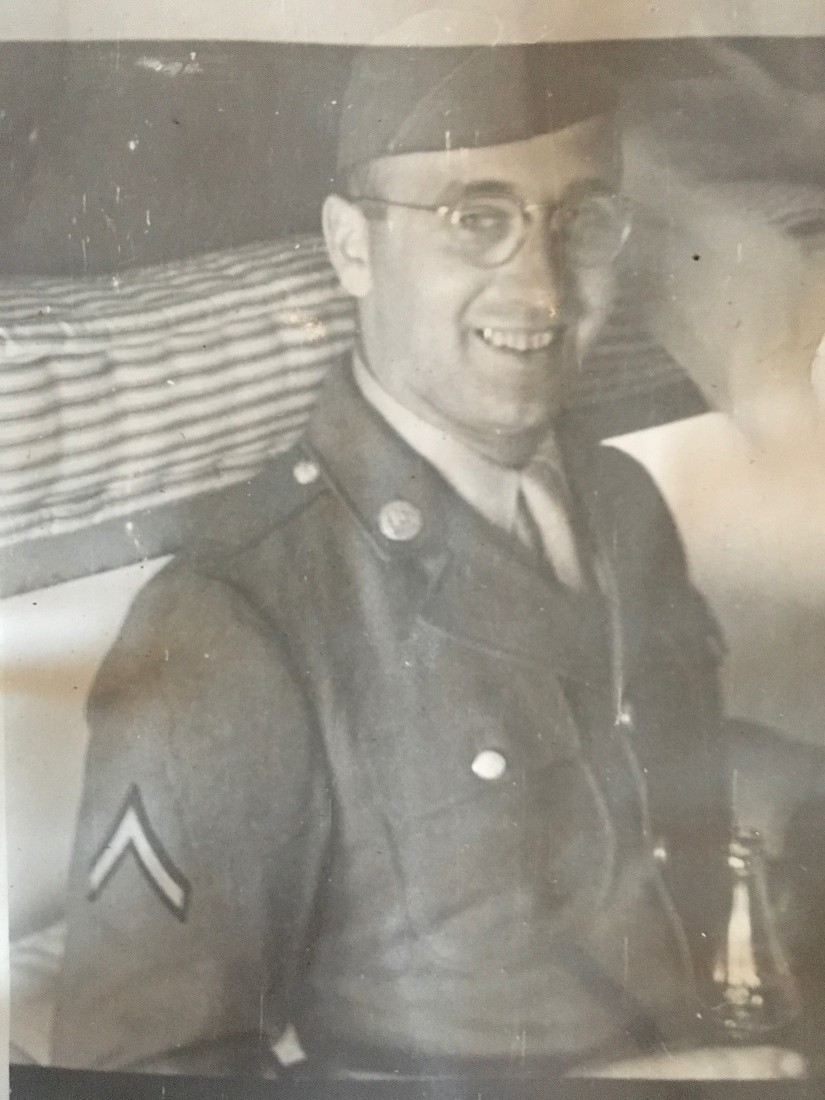 Henry Wald (born as Heinz Werner Schőnwald) poses in his Army uniform, circa 1943.
 -
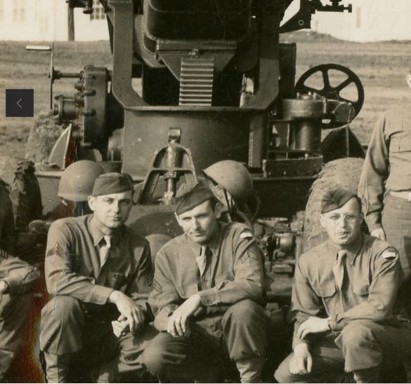 Wald, at right, with fellow GIs in front of an artillery emplacement.

Technical record
| Field | Imported value |
|---|---|
| row_source | demographics |
Sources
- Camp Ritchie class roster (classes 1–31), merged research file
- NARA World War II Army enlistment records (where a NARA ASN is present)
- 1940 U.S. Census (where a census match is present)
- Ritchie Boys of WWII Facebook page, post dated 2026-07-13 (1 post)