Soft launch: Soldier biographies and research notes vary in completeness. Prefer class-roster, NARA, newspapers, and other cited sources for contested facts — treat Research notes as leads, not settled history. Anyone can correct a page; contact us with questions.
Stern, Guy (37413105): Difference between revisions
Link other Ritchie Boys named in Facebook bio/gallery captions |
Scrub Facebook voice; factual biographical summary |
||
| Line 36: | Line 36: | ||
== Biography == | == Biography == | ||
[[Stern, Guy (37413105)|Guy Stern]] (ASN 37413105), also known as [[Stern, Guy (37413105)|Günther Stern]] was born in 1922 in Germany, of Jewish faith, with Camp Ritchie Class 8 (section 5C, private), IPW Team 41, specialty POW interrogation, and Military Intelligence Service. He enlisted at Jefferson Barracks, Missouri; Records list two years of college and an occupation as a waiter. | |||
He fled Nazi Germany for the United States and served in U.S. Army military intelligence as one of the German-Jewish Ritchie Boys. At Camp Ritchie he trained in interrogation methods that Bruce Henderson later summarized from Stern's account in ''Sons and Soldiers'': superior knowledge of enemy units, controlled incentives such as food or cigarettes, finding common interests with a prisoner, and exploiting a prisoner's fears—always under the Judge Advocate General admonition never to touch a prisoner. | He fled Nazi Germany for the United States and served in U.S. Army military intelligence as one of the German-Jewish Ritchie Boys. At Camp Ritchie he trained in interrogation methods that Bruce Henderson later summarized from Stern's account in ''Sons and Soldiers'': superior knowledge of enemy units, controlled incentives such as food or cigarettes, finding common interests with a prisoner, and exploiting a prisoner's fears—always under the Judge Advocate General admonition never to touch a prisoner. | ||
With Fred Howard, and with help from Capt. [[Kann, Edgar W. (01183329)|Edgar Kann]], Stern also took part in the well-known "Commissar Krukov" ruse used to pressure German prisoners of war | With Fred Howard, and with help from Capt. [[Kann, Edgar W. (01183329)|Edgar Kann]], Stern also took part in the well-known "Commissar Krukov" ruse used to pressure German prisoners of war. | ||
Three days after D-Day (D+3), Stern landed at Normandy with a special military intelligence unit composed largely of German-, Austrian-, and Czech-born Jewish soldiers and interrogated prisoners of war on the front lines. After the war he remained a public interpreter of that experience: he was featured in the documentary film ''The Ritchie Boys'', spoke at events such as "Sunset on the Mountain" at the former Fort Ritchie Officers' Club, and served as director of the Harry and Wanda Zekelman International Institute of the Righteous at the Holocaust Memorial Center in Farmington Hills, Michigan. He was also a long-time board member of the Leo Baeck Institute in New York. | Three days after D-Day (D+3), Stern landed at Normandy with a special military intelligence unit composed largely of German-, Austrian-, and Czech-born Jewish soldiers and interrogated prisoners of war on the front lines. After the war he remained a public interpreter of that experience: he was featured in the documentary film ''The Ritchie Boys'', spoke at events such as "Sunset on the Mountain" at the former Fort Ritchie Officers' Club, and served as director of the Harry and Wanda Zekelman International Institute of the Righteous at the Holocaust Memorial Center in Farmington Hills, Michigan. He was also a long-time board member of the Leo Baeck Institute in New York. | ||
His memoir ''Invisible Ink'' | His memoir ''Invisible Ink'' (2020) describes his training, Normandy landing, and later life. | ||
== Research notes == | == Research notes == | ||
Revision as of 15:30, 26 August 2026
| Guy Stern | |
|---|---|
.jpg) | |
| Personal details | |
| Birth name | Günther Stern |
| Born | 14 January 1922 Hildesheim, Hanover, Prussia, Germany |
| Died | 7 December 2023 Detroit, Michigan, US |
| Nativity | Germany |
| Religion | Jewish |
| Military service | |
| Allegiance |  United States United States |
| Branch |  United States Army United States Army |
| ASN | 37413105 |
| Rank | Private |
| Camp Ritchie | Class 8 (17 May – 16 July 1943) |
| Section | 5C |
| Enlisted | Jefferson Barracks, Missouri |
| Specialty | POW interrogation |
| Unit / division | Military Intelligence Service |
| Team | IPW 41 |
{{Needs source}}, or explain disagreements on talk. Baseline import notes: About the data.
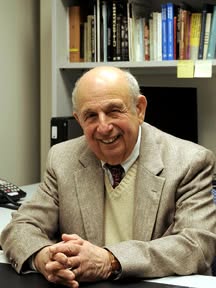
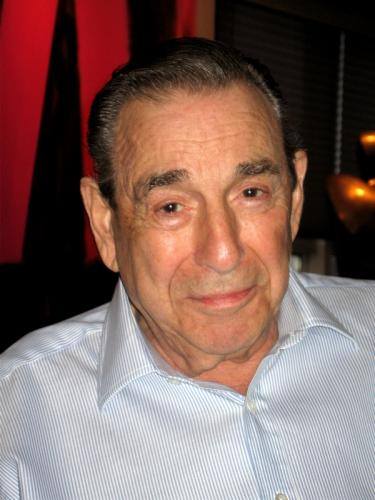
Guy Stern (1922–2023), born Günther Stern in Germany, was a Jewish Ritchie Boy, interrogator, memoirist, and public educator. After Camp Ritchie Class 8 he landed in Normandy shortly after D-Day with IPW Team 41, interrogated prisoners on the front lines, and later became one of the best-known voices of the Ritchie Boys through the documentary The Ritchie Boys, Bruce Henderson's Sons and Soldiers, and his memoir Invisible Ink.
Biography
Guy Stern (ASN 37413105), also known as Günther Stern was born in 1922 in Germany, of Jewish faith, with Camp Ritchie Class 8 (section 5C, private), IPW Team 41, specialty POW interrogation, and Military Intelligence Service. He enlisted at Jefferson Barracks, Missouri; Records list two years of college and an occupation as a waiter.
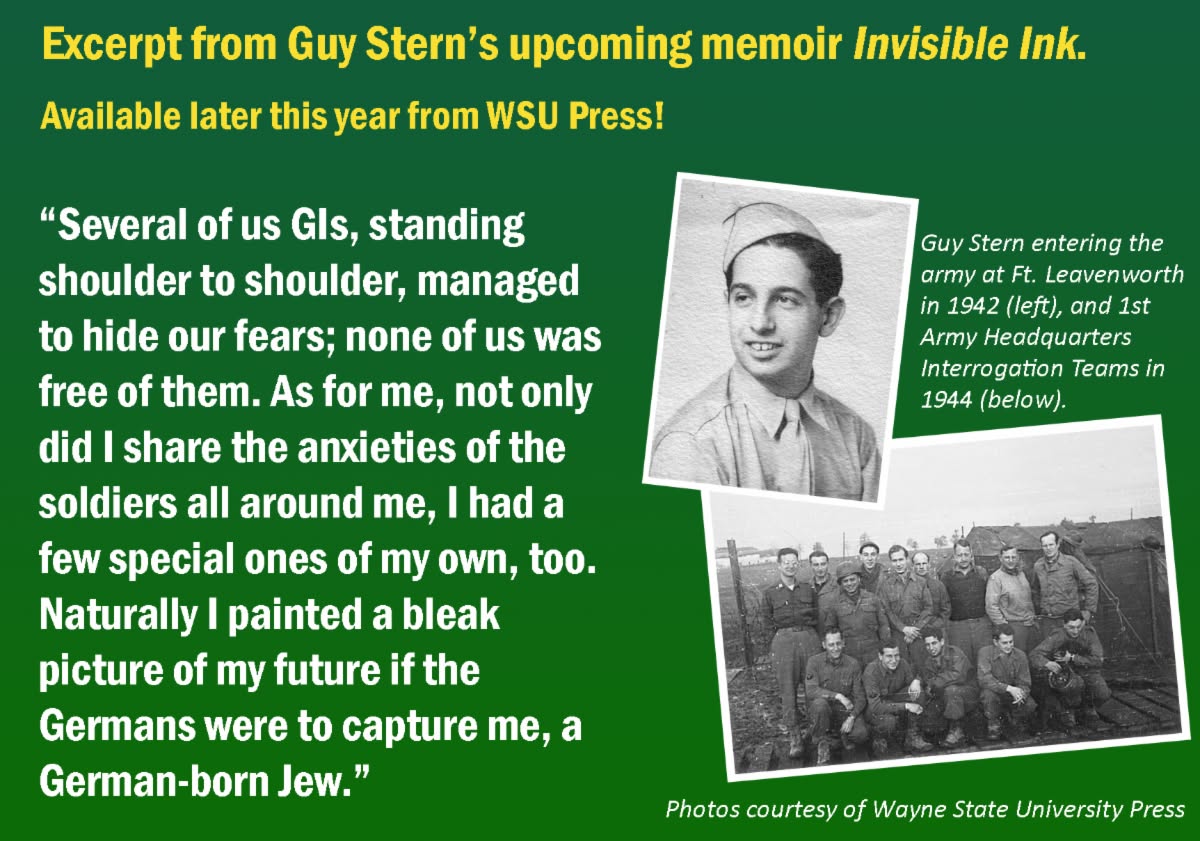
He fled Nazi Germany for the United States and served in U.S. Army military intelligence as one of the German-Jewish Ritchie Boys. At Camp Ritchie he trained in interrogation methods that Bruce Henderson later summarized from Stern's account in Sons and Soldiers: superior knowledge of enemy units, controlled incentives such as food or cigarettes, finding common interests with a prisoner, and exploiting a prisoner's fears—always under the Judge Advocate General admonition never to touch a prisoner.
With Fred Howard, and with help from Capt. Edgar Kann, Stern also took part in the well-known "Commissar Krukov" ruse used to pressure German prisoners of war.
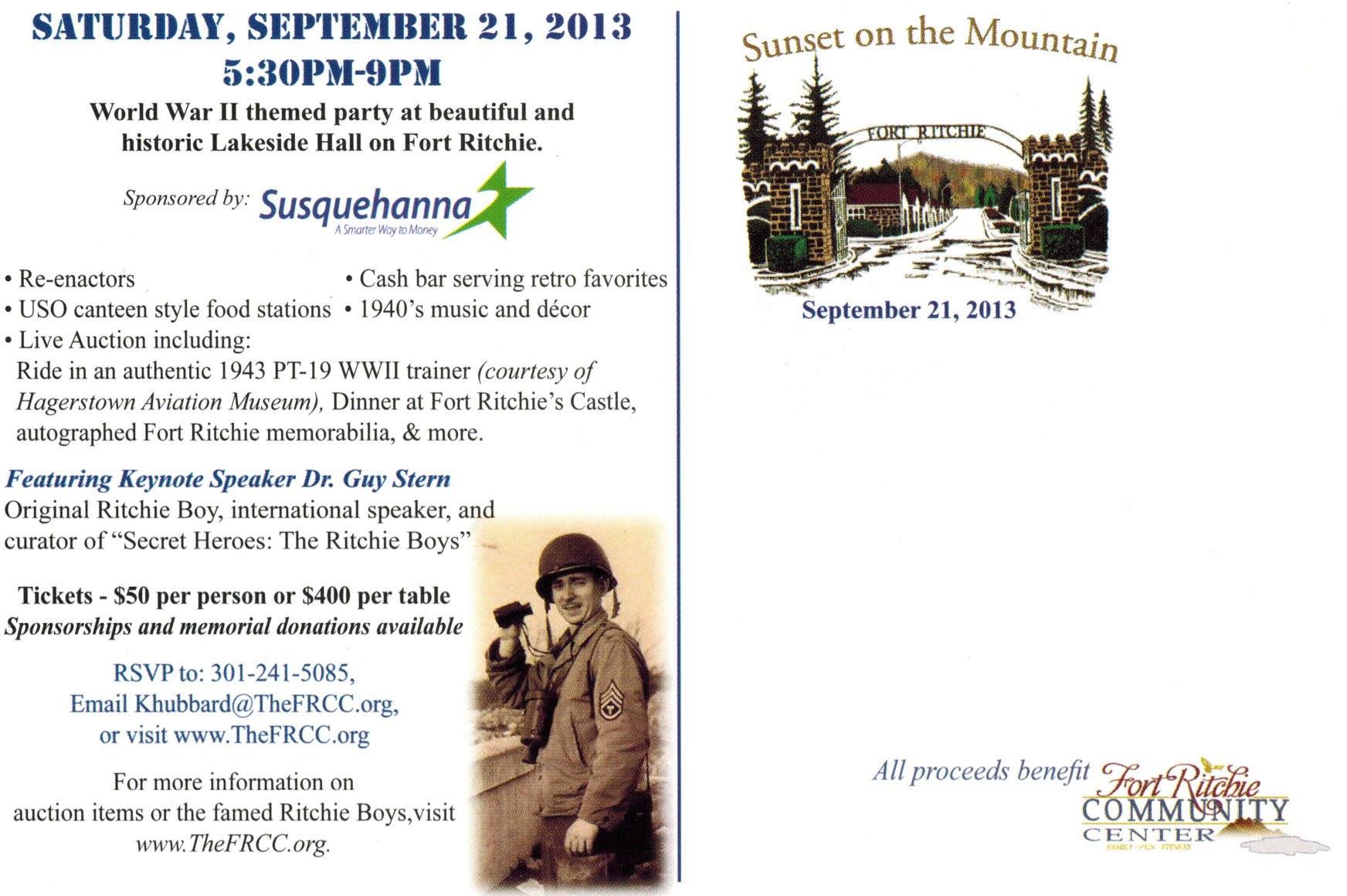
Three days after D-Day (D+3), Stern landed at Normandy with a special military intelligence unit composed largely of German-, Austrian-, and Czech-born Jewish soldiers and interrogated prisoners of war on the front lines. After the war he remained a public interpreter of that experience: he was featured in the documentary film The Ritchie Boys, spoke at events such as "Sunset on the Mountain" at the former Fort Ritchie Officers' Club, and served as director of the Harry and Wanda Zekelman International Institute of the Righteous at the Holocaust Memorial Center in Farmington Hills, Michigan. He was also a long-time board member of the Leo Baeck Institute in New York.
His memoir Invisible Ink (2020) describes his training, Normandy landing, and later life.
Research notes
- OTC;SO 217 (9/7/43)
- Ritchie Boy
- 1/14/1922-A
- German literature scholar; Professor Emeritus, Wayne State University
- Portrait and summary from Notable Ritchie Boys slides (source).
Gallery
-
-
-
-
-
-

-
-
-

-

-
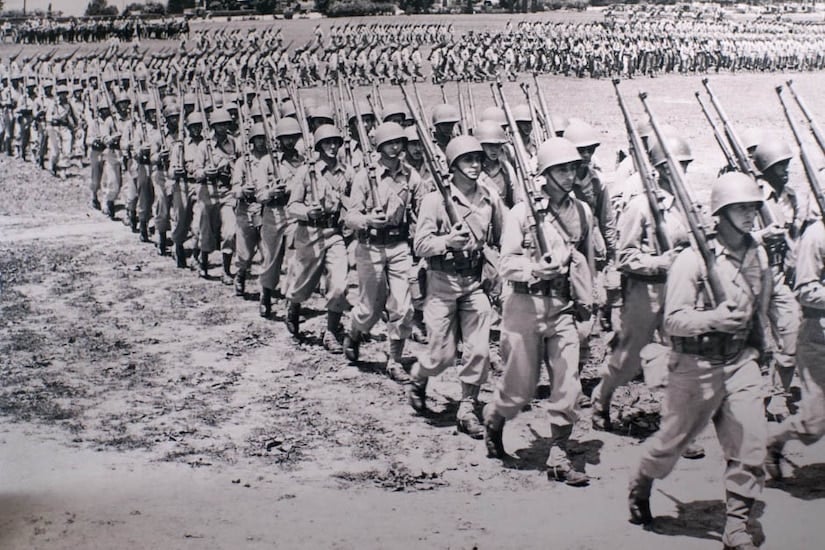
-
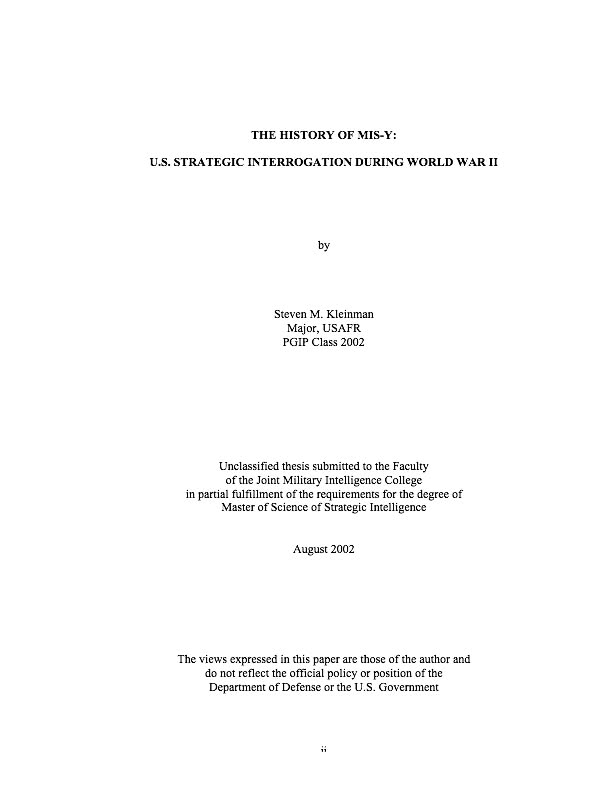
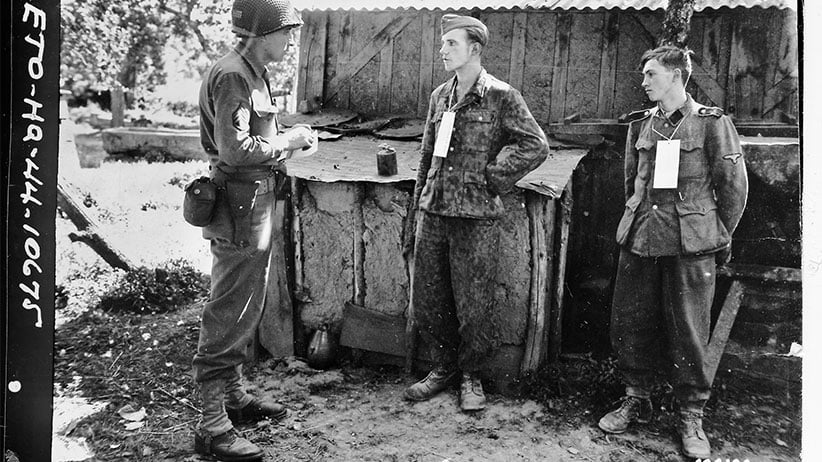 and say they can have it if they cooperate.' 3) 'Play on their like and inclinations.' 4) 'Find out his anxieties and fears and make him think they will soon become a reality.' In the photo below, Ritchie Boy Martin Selling is Martin Selling questions German prisoners near the front in France, 1944.
 -
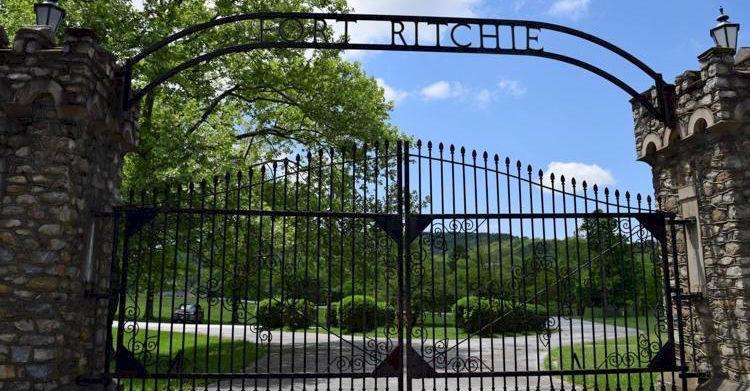


Technical record
| Field | Imported value |
|---|---|
| Nara ASN | 37413105 |
| Nara Name | STERN GUY |
| Nara State | 75 |
| Nara County | 191 |
| Nara POE | 7545 |
| Nara DOE | 210143 |
| Nara Grade Alpha | PVT |
| Nara Grade Code | 8 |
| Nara Branch Alpha | BI |
| Nara Branch Code | 0 |
| Branch | Branch Immaterial - Warrant Officers, USA |
| Nara Term or Enlistment | 5 |
| Term of enlistment | Enlistment for the duration of the War or other emergency, plus six months, subject to the discretion of the President or otherwise according to law |
| Defer. Date | 0 |
| Nara Source | 0 |
| Nara Nativity | N1 |
| Nara Year of Birth | 22 |
| Nara Race | 1 |
| Nara Race Description | White citizen |
| Nara Education | 6 |
| Nara Civilian Occupation | 227 |
| Nara Marital Status | 1 |
| Nara Height (inches) | 66 |
| Nara Weight (lbs) | 138 |
| Class_ASN | 37413105 |
| Class_Name | STERN, Guy |
| match_method | asn_exact_name_exact |
| row_source | both |
Sources
- Wikipedia: Guy Stern
- Camp Ritchie class roster (classes 1–31), merged research file
- NARA World War II Army enlistment records (where a NARA ASN is present)
- 1940 U.S. Census (where a census match is present)
- Ritchie Boys of WWII Facebook page, post dated 2014-01-18 (1 post)
- Ritchie Boys of WWII Facebook page, post dated 2017-08-13 (1 post)
- Ritchie Boys of WWII Facebook page, post dated 2017-09-01 (1 post)
- Ritchie Boys of WWII Facebook page, post dated 2019-03-11 (1 post)
- Ritchie Boys of WWII Facebook page, post dated 2020-02-09 (1 post)
- Ritchie Boys of WWII Facebook page, post dated 2020-06-01 (1 post)
- Ritchie Boys of WWII Facebook page, post dated 2020-06-09 (1 post)
- Ritchie Boys of WWII Facebook page, post dated 2020-08-06 (1 post)
- Ritchie Boys of WWII Facebook page, post dated 2020-09-16 (3 posts)
- Ritchie Boys of WWII Facebook page, post dated 2023-06-01 (1 post)
- Ritchie Boys of WWII Facebook page, post dated 2023-12-08 (1 post)
- Ritchie Boys of WWII Facebook page, post dated 2023-12-14 (1 post)
- Ritchie Boys of WWII Facebook page, post dated 2024-03-11 (1 post)
- Facebook-linked source: bestdefensefoundation.org
- Facebook-linked source: aussiedlerbote.de
- Facebook-linked source: timesofisrael.com
- Facebook-linked source: YouTube video
- The Stories essay