Soft launch: Soldier biographies and research notes vary in completeness. Prefer class-roster, NARA, newspapers, and other cited sources for contested facts — treat Research notes as leads, not settled history. Anyone can correct a page; contact us with questions.
Secret Heroes/Battle of the Bulge: Difference between revisions
Note Oscar Koch / MIS advance warning |
Add Faces of the Bulge portrait gallery above essay |
||
| Line 1: | Line 1: | ||
{{DISPLAYTITLE:Secret Heroes/Battle of the Bulge}} | {{DISPLAYTITLE:Secret Heroes/Battle of the Bulge}} | ||
'''Secret Heroes/Battle of the Bulge''', written by '''Dan Gross'''. | '''Secret Heroes/Battle of the Bulge''', written by '''Dan Gross'''. | ||
== Faces of the Bulge == | |||
A working gallery of Ritchie Boys with a clear, sourced link to the Ardennes offensive (warnings beforehand, service during the battle, or contemporaneous intelligence work). This is '''not''' a complete roster — Ritchie Boys served across the divisions that fought there. Names are added only when a profile, essay, interview, or memo on this site supports the connection. | |||
<div class="notable-slides"> | |||
<div class="notable-slide-card"> | |||
<div class="notable-slide-photo">[[File:Brombert, Victor (32906913).jpg|200px|link=Brombert, Victor H. (32906913)|alt=Victor H. Brombert]]</div> | |||
<div class="notable-slide-body"> | |||
<div class="notable-slide-name">[[Brombert, Victor H. (32906913)|Victor H. Brombert]]</div> | |||
<div class="notable-slide-meta">[[Class 11|Class 11]]</div> | |||
<ul> | |||
<li>Filed Ardennes buildup reports before the offensive</li> | |||
<li>Saw action at the Bulge (2nd Armored Division)</li> | |||
</ul> | |||
</div></div> | |||
<div class="notable-slide-card"> | |||
<div class="notable-slide-photo">[[File:1825128857509027.png|200px|link=Horlick, Max (32567180)|alt=Max Horlick]]</div> | |||
<div class="notable-slide-body"> | |||
<div class="notable-slide-name">[[Horlick, Max (32567180)|Max Horlick]]</div> | |||
<div class="notable-slide-meta">[[Class 19|Class 19]] · Mobile Field Intelligence</div> | |||
<ul> | |||
<li>Filed Ardennes buildup reports with MFIU units</li> | |||
<li>Opened his book ''Snafu'' with the Battle of the Bulge</li> | |||
</ul> | |||
</div></div> | |||
<div class="notable-slide-card"> | |||
<div class="notable-slide-photo">[[File:Enemy I Knew William Katzenstein 1.png|200px|link=Katzenstein, William B. (33722535)|alt=William B. Katzenstein]]</div> | |||
<div class="notable-slide-body"> | |||
<div class="notable-slide-name">[[Katzenstein, William B. (33722535)|William B. Katzenstein]]</div> | |||
<div class="notable-slide-meta">[[Class 11|Class 11]] · 82nd Airborne</div> | |||
<ul> | |||
<li>Trucked into the Bulge; wounded by shrapnel the first day</li> | |||
<li>[[The Stories/The Enemy I Knew/William Katzenstein|Full story]]</li> | |||
</ul> | |||
</div></div> | |||
<div class="notable-slide-card"> | |||
<div class="notable-slide-nophoto">No portrait yet</div> | |||
<div class="notable-slide-body"> | |||
<div class="notable-slide-name">[[King, Edmund L. (01305597)|Edmund L. King]]</div> | |||
<div class="notable-slide-meta">[[Class 7|Class 7]] · MFIU No. 2</div> | |||
<ul> | |||
<li>Signed the unit memo defending pre-offensive intelligence collection</li> | |||
</ul> | |||
</div></div> | |||
<div class="notable-slide-card"> | |||
<div class="notable-slide-photo">[[File:Enemy I Knew Kurt Klein 1.png|200px|link=Klein, Kurt (32554510)|alt=Kurt Klein]]</div> | |||
<div class="notable-slide-body"> | |||
<div class="notable-slide-name">[[Klein, Kurt (32554510)|Kurt Klein]]</div> | |||
<div class="notable-slide-meta">[[Class 5|Class 5]]</div> | |||
<ul> | |||
<li>Pulled north to Luxembourg when the Bulge began</li> | |||
<li>[[The Stories/The Enemy I Knew/Kurt Klein|Full story]]</li> | |||
</ul> | |||
</div></div> | |||
<div class="notable-slide-card"> | |||
<div class="notable-slide-nophoto">No portrait yet</div> | |||
<div class="notable-slide-body"> | |||
<div class="notable-slide-name">[[Krasny, John Friedrich (34170536)|John F. Krasny]]</div> | |||
<div class="notable-slide-meta">[[Class 10|Class 10]]</div> | |||
<ul> | |||
<li>Memoir: interrogators warned SHAEF of the German buildup</li> | |||
<li>Felt the warnings were ignored</li> | |||
</ul> | |||
</div></div> | |||
<div class="notable-slide-card"> | |||
<div class="notable-slide-photo">[[File:1811167892238457.jpg|200px|link=Shehab, Alfred H. M. (01012319)|alt=Alfred H. M. Shehab]]</div> | |||
<div class="notable-slide-body"> | |||
<div class="notable-slide-name">[[Shehab, Alfred H. M. (01012319)|Alfred H. M. Shehab]]</div> | |||
<div class="notable-slide-meta">[[Class 6|Class 6]] · 38th Cavalry Squadron</div> | |||
<ul> | |||
<li>Reconnaissance in the Ardennes when the offensive opened 16 December 1944</li> | |||
</ul> | |||
</div></div> | |||
<div class="notable-slide-card"> | |||
<div class="notable-slide-photo">[[File:Enemy I Knew Manfred Steinfeld 1.png|200px|link=Steinfeld, Manfred (36737899)|alt=Manfred Steinfeld]]</div> | |||
<div class="notable-slide-body"> | |||
<div class="notable-slide-name">[[Steinfeld, Manfred (36737899)|Manfred Steinfeld]]</div> | |||
<div class="notable-slide-meta">[[Class 17|Class 17]]</div> | |||
<ul> | |||
<li>Convoy into the Ardennes; interrogated prisoners during the Bulge</li> | |||
<li>[[The Stories/The Enemy I Knew/Manfred Steinfeld|Full story]]</li> | |||
</ul> | |||
</div></div> | |||
<div class="notable-slide-card"> | |||
<div class="notable-slide-photo">[[File:Stern, Guy (37413105).jpg|200px|link=Stern, Guy (37413105)|alt=Guy Stern]]</div> | |||
<div class="notable-slide-body"> | |||
<div class="notable-slide-name">[[Stern, Guy (37413105)|Guy Stern]]</div> | |||
<div class="notable-slide-meta">[[Class 8|Class 8]]</div> | |||
<ul> | |||
<li>Psychological operations during the Bulge</li> | |||
<li>[[The Stories/Guy Stern|Full story]]</li> | |||
</ul> | |||
</div></div> | |||
<div class="notable-slide-card"> | |||
<div class="notable-slide-nophoto">No portrait yet</div> | |||
<div class="notable-slide-body"> | |||
<div class="notable-slide-name">[[Vogel, Leroy (01322741)|Leroy Vogel]]</div> | |||
<div class="notable-slide-meta">MFIU No. 1</div> | |||
<ul> | |||
<li>5 January 1945 memo: MFIU bulletins had flagged the buildup</li> | |||
</ul> | |||
</div></div> | |||
</div> | |||
Max Oppenheimer is named in the essay below but is not shown here yet: two soldiers share that name on the roster, and the source does not say which one filed the reports. Additional faces will be added as sources confirm them. | |||
== Battle of the Bulge == | == Battle of the Bulge == | ||
| Line 60: | Line 175: | ||
== See also == | == See also == | ||
* [[Notable Ritchie Boys]] — portrait gallery of selected soldiers | |||
* [[Secret Heroes/First Class]] | * [[Secret Heroes/First Class]] | ||
* [[Introduction]] | * [[Introduction]] | ||
Revision as of 21:00, 2 September 2026
Secret Heroes/Battle of the Bulge, written by Dan Gross.
Faces of the Bulge
A working gallery of Ritchie Boys with a clear, sourced link to the Ardennes offensive (warnings beforehand, service during the battle, or contemporaneous intelligence work). This is not a complete roster — Ritchie Boys served across the divisions that fought there. Names are added only when a profile, essay, interview, or memo on this site supports the connection.


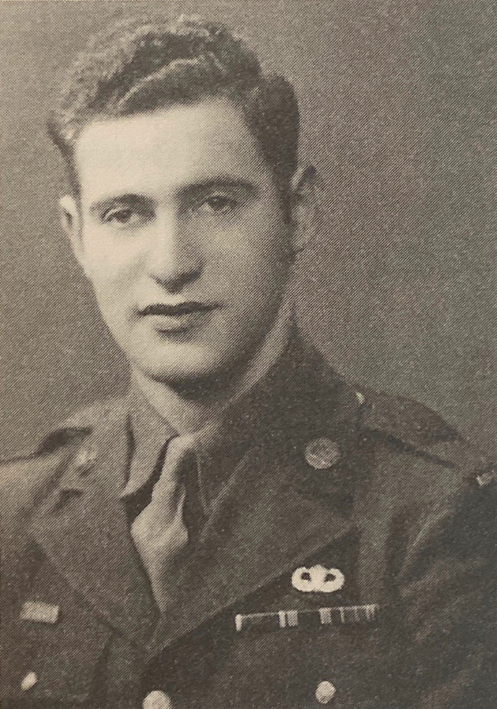
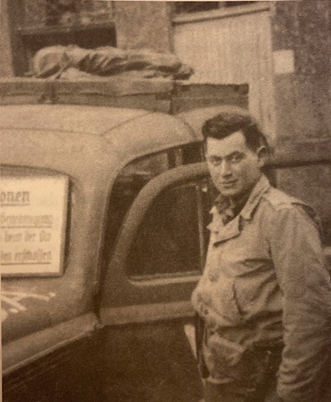
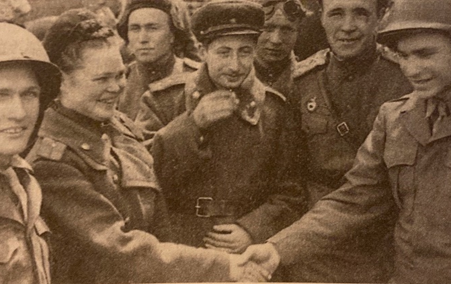
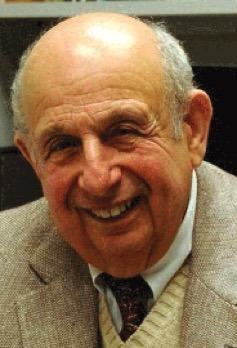
Max Oppenheimer is named in the essay below but is not shown here yet: two soldiers share that name on the roster, and the source does not say which one filed the reports. Additional faces will be added as sources confirm them.
Battle of the Bulge
The epic battle in the Ardennes known as the Battle of the Bulge began on December 16, 1944, and continued until January 25, 1945 according to official history. The Germans had amassed 20 divisions, including four crack SS panzer divisions assigned to Sepp Dietrich’s Sixth Army. The American contingent consisted of six infantry divisions and two armored divisions. One month later, we were forced to increase the size of our troops to 22 infantry and 8 armored divisions. Ritchie Boys were serving in every one of those divisions. In October, November and early December 1944, many Camp Ritchie-trained servicemen, including Victor Brombert, John Krasny[note 1], Max Oppenheimer, among others, as well as those serving with Mobile Field Intelligence Units like Leroy Vogel and Max Horlick[note 2] filed reports of the German buildup taking place in the Ardennes. The German breakthrough over an 80-mile stretch of lightly defended forest was almost universally considered a catastrophic failure of American intelligence. This was loudly expressed on December 28th, 1944, in an article which appeared on the front page of the Paris Herald Tribune.
How could this be with so many Camp Ritchie trained intelligence officers on the ground? We now know that the Battle of the Bulge was not a failure of intelligence but a failure to use timely and accurate intelligence. Intelligence is a dangerous game of cat and mouse. In planning the Ardennes offensive, Hitler knew that he must maintain radio silence, must transmit orders via couriers, and must move men and materials under cover at night. He knew that our Air Force could not be utilized when there was heavy cloud cover. On our side, we had multiple reports from captured German soldiers and from residents that the German buildup was very large and serious. These reports came primarily from the trained intelligence officers who were systematically collecting intelligence on the ground, most of whom were Ritchie Boys. (General Oscar Koch, Patton’s G-2, later acknowledged that advance warning of the offensive drew on Military Intelligence Service reporting — see also Camp Ritchie#Europe.) However, our Generals at the highest level did not consider this knowledge credible or actionable. They were convinced that Germany had been so severely crippled from massive bombings and were on the run from battleground defeats that they could not mount an attack. They decided to ignore what their trained intelligence officers on the ground were saying and were content to remain totally passive. Not only was there no Allied attempt to assign reserves to be available for the potential German offensive, but officers in the front line were not even told to be prepared for such an event. This is one of the consequences of the deadly cat and mouse game of intelligence.
One of the more succinct summaries of this was expressed in the following memo written by Ritchie Boy Lt. Leroy Vogel referring to the transmission of intelligence from Mobile Field Interrogation Unit No. 1:
Date 5 January 1945
SUBJECT: Public Criticism of Allied Intelligence Service.
TO: Commanding Officer MFIU No. 1, ADV SECT COM ZONE, ETOUSA.1. A communication from Liaison Section, FID MIS, dated 28 Dec 1944 included an article which appeared on the front page of the Paris Herald Tribune 28 Dec under date line of Associated Press. Pointed criticism of Allied Intelligence Service includes the following statements:
“It is now apparent that the Allied Intelligence not only failed to detect the build-up by Von Rundstedt on a weak spot on the Western Front, but also, perhaps for the umpteenth time in this war, underestimated German strength and capabilities.
“The expert official opinion given to correspondents was…that Von Rundstedt had practically no strategic reserves.
“Also that the German Air Force was practically non-existent.
“And finally, that shortage of gasoline and war materials caused by our brilliant bombings precluded any large-scale German effort”.
2. The implied criticism of intelligence collecting agencies does not apply unqualifiedly to the intelligence collected and published in PW Intelligence Bulletins by MFIU No. 1 prior to the current offensive.
3. Attached inclosure [sic], listing extracts from and references to MFIU PW Intelligence Bulletins published between 31 Oct and 14 Dec, indicate that:
- There was evidence of “the build up on a weak spot”.
- Many men were in trng and enroute.
- Much armored equipment was in production and repair and depots.
- The German aircraft industry was very active.
- Paratroops were withdrawn from Inf units and other para trng was being given.
- Large synthetic POL plants, refineries, and dumps were unbombed or undamaged.
- Railroads, although under a strain, were meeting the demands placed on them.
Signed Leroy Vogel, 1st Lt. Inf, Briefing Officer.
Additional information was provided in an undated four-page memo signed by Captain Edmund L. King on behalf of Mobile Field Interrogation Unit No. 2:
A Statement – on – whether, as a part of the Allied “Intelligence Service”, Mobile Field Interrogation Unit No. 2 contributed its share to the estimate of the enemy’s capabilities just prior to the German counter-offensive of 16 December 1944.
This memo provided detailed information on the enemy’s organized military manpower as well as its material resources, providing references to Intelligence Bulletins prepared in November and early December. In summary, Captain King stated: “It is nonsense, then, to say that the Allied ‘Intelligence Service’ failed to keep abreast of the situation behind the German lines prior to the December counter-offensive. We believe in this unit that our job is to collect and disseminate information. It would be irresponsible of us if we should venture to evaluate intelligence based on what we see of the enemy only through the minds of prisoners of war. Evaluation is the function of offices that are able to study the entire corpus of collected information”.
An especially tragic outcome of our inaction resulted in the decimation of the 106th Infantry Division, which consisted of untested men, many of whom had just experienced the sudden end of the ASTP Program. Why were its officers, and those of the other Divisions, never told that an attack was imminent, or likely, or even possible? Did SHAEF believe that if American officers on the frontlines were alerted to a possible attack, the information would leak out to the enemy? Would that have been so bad?
Even at this late date, while we celebrate the magnificent story of the bravery of our servicemen in stopping the German’s Ardennes offensive, very few people know the real story of the tragedy of the Battle of the Bulge. It is only through the honest and accurate revelations of those few Commanders who were able to know that we can understand this tragic snafu that cost 19,276 American lives. For this, we must wonder why British historian Charles Whiting’s final words in “The Last Assault” were “General Dwight D. Eisenhower had gotten away with it” and we need to take our hats off to General Omar Bradley for telling it like it was in his frank autobiography “A Soldier’s Life”. It was Eisenhower who put British General Bernard Montgomery in command of two American Armies with the 21st Army Group, a move which most historians acknowledge was detrimental to the Allied response in the North at the Bulge. General Omar Bradley honestly admitted “In the face of this astonishing German build-up, I had greatly underestimated the enemy’s offensive capabilities”.
Notes
- ↑ In John Krasny’s obituary in the Washington Post (16 April 2005), the following paragraph appears: “In his unpublished memoir, Mr. Krasny said that interrogators discovered in advance the German troop buildup for the Battle of the Bulge. The information, gleaned from prisoner interviews, was passed to Supreme Headquarters, Allied Expeditionary Force, but he and his colleagues felt that their warnings were ignored. ‘For me, knowing that SHAEF had strong warnings but did not act upon them remains the most frustrating event in my life,’ Mr. Krasny wrote.”
- ↑ In his last published book (Snafu) dealing with fouled-up war situations over the course of history, Max Horlick placed “The Battle of the Bulge” as his first chapter to emphasize the magnitude of this military blunder.
The original essay’s footnotes on Krasny and Horlick are retained above. Two soldiers named Max Oppenheimer appear in this wiki (Oppenheimer, Max (32611945) and Oppenheimer, Max Jr (39540698)); the source page does not specify which one filed Ardennes buildup reports.
See also
- Notable Ritchie Boys — portrait gallery of selected soldiers
- Secret Heroes/First Class
- Introduction
- Camp Ritchie
- Contents
- Main Page