Soft launch: Soldier biographies and research notes vary in completeness. Prefer class-roster, NARA, newspapers, and other cited sources for contested facts — treat Research notes as leads, not settled history. Anyone can correct a page; contact us with questions.
Seidlin, Oskar (31050474): Difference between revisions
Enrich biography/timeline/awards from cleaned OSU Seidlin biographical PDF OCR |
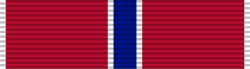
Fix Bronze Star ribbon: awards_ribbon_rows must be filename not label |
||
| Line 26: | Line 26: | ||
|awards_grid=Bronze Star Medal | |awards_grid=Bronze Star Medal | ||
|awards_ribbons=Ribbon_Bronze_Star_Medal_ribbon.png | |awards_ribbons=Ribbon_Bronze_Star_Medal_ribbon.png | ||
|awards_ribbon_rows= | |awards_ribbon_rows=Ribbon_Bronze_Star_Medal_ribbon.png | ||
}} | }} | ||
Latest revision as of 02:02, 18 September 2026
| Oskar Seidlin | |
|---|---|
| Personal details | |
| Birth name | Salo Oskar Koplowitz |
| Born | 17 February 1911 Königshütte, Germany |
| Died | 11 December 1984 Bloomington, Indiana |
| Nativity | Germany |
| Religion | Protestant |
| Known for | Germanist; Bronze Star; Ohio State / Indiana University |
| Awards | Bronze Star Medal |
| Military service | |
| Allegiance |  United States United States |
| Branch |  United States Army United States Army |
| ASN | 31050474 |
| Rank | Technician Third Grade |
| Rank at Ritchie | Technician Fourth Grade |
| Camp Ritchie | Class 8 (17 May – 16 July 1943) |
| Section | 5A |
| Enlisted | Springfield, Massachusetts |
| Specialty | Military intelligence; psychological warfare; German media reconstruction |
|
| Bronze Star Medal |
{{Needs source}}, or explain disagreements on talk. Baseline import notes: About the data.
Oskar Seidlin (17 February 1911 – 11 December 1984), born Salo Oskar Koplowitz, was a German-Jewish literary scholar and Camp Ritchie Class 8 graduate who earned the Bronze Star serving with U.S. Army intelligence and psychological warfare teams that rebuilt German newspapers and radio.
Biography[edit | edit source]
Oskar Seidlin was born Salo Oskar Koplowitz in Königshütte, Upper Silesia, Germany, on 17 February 1911. After Hitler’s seizure of power in 1933 he continued his studies in Switzerland, earning a Ph.D. summa cum laude from the University of Basel in July 1935. He emigrated to the United States in 1938, worked for a time in New York as secretary to Thomas Mann and Erika Mann, and in 1939 began teaching German literature at Smith College in Northampton, Massachusetts (lecturer, then assistant professor), while also teaching summers at Middlebury College’s German Summer School.
Inducted in 1942, Seidlin trained at Camp Ritchie (Class 8) and served nearly four years in the U.S. Army (1942–1946), on leave from Smith. He took part in the early stages of the European invasion and later worked on teams that revived German newspapers and radio stations, receiving citations from First U.S. Army, the 83rd Infantry Division, and Fifteenth Army Group headquarters and Psychological Warfare, together with the Bronze Star Medal. After the war he returned briefly to Smith and Middlebury before joining Ohio State University in 1946 as an assistant professor of German.
Seidlin rose to associate professor (1948), professor (1950), and Ohio Regents Professor (1966). He was a visiting professor at the University of Washington (winter 1949), a guest of the Federal Republic of Germany (1956), Ford research professor in residence at the Free University of Berlin (1959), and a Guggenheim fellow (1962) for work on Joseph von Eichendorff. Honors included Phi Beta Kappa honorary membership (1957), the Eichendorff Medal (1958), the Golden Goethe Medal (1963), Ohio State’s Alumni Award for Distinguished Teaching (1960) and the College of Arts and Sciences Good Teaching Award (1966), the German Academy of Language and Literature’s Prize for Germanic Studies Abroad (1968), and an honorary Doctor of Humane Letters from the University of Michigan (1969). He declined a Munich University professorship offered by Bavaria, citing contemporary West German excesses that recalled 1932–1933. Designated Regents Professor Emeritus in 1972, he moved to Indiana University as a distinguished professor of Germanic languages and retired in 1979. He wrote widely on Goethe, Eichendorff, Thomas Mann, and comparative literature and died in Bloomington, Indiana, on 11 December 1984.
Gallery[edit | edit source]
After you are autoconfirmed, upload a photo and add [[File:Example.jpg|thumb|caption]] here, or set |photo=Example.jpg in the infobox.
Technical record[edit | edit source]
| Field | Imported value |
|---|---|
| MRBC2 | 2 |
| MRBC3 | 3 |
| Approx Age at Death | 73 |
| Nara ASN | 31050474 |
| Nara Name | SEIDLIN OSKAR |
| Nara State | 13 |
| Nara County | 15 |
| Nara POE | 1375 |
| Nara DOE | 170342 |
| Nara Grade Alpha | PVT |
| Nara Grade Code | 8 |
| Nara Branch Alpha | BI |
| Nara Branch Code | 0 |
| Branch | Branch Immaterial - Warrant Officers, USA |
| Nara Term or Enlistment | 5 |
| Term of enlistment | Enlistment for the duration of the War or other emergency, plus six months, subject to the discretion of the President or otherwise according to law |
| Defer. Date | 0 |
| Nara Source | 0 |
| Nara Nativity | N1 |
| Nara Year of Birth | 11 |
| Nara Race | J |
| Nara Race Description | White not yet a citizen |
| Nara Education | 8 |
| Nara Civilian Occupation | 31 |
| Nara Marital Status | 6 |
| Nara Height (inches) | 67 |
| Nara Weight (lbs) | 119 |
| Class_ASN | 31050474 |
| Class_Name | SEIDLIN, Oskar |
| match_method | asn_exact_name_exact |
| row_source | both |
Timeline[edit | edit source]
- 17 February 1911 — Born Salo Oskar Koplowitz in Königshütte, Upper Silesia, Germany.
- 1933 — Leaves Germany after Hitler’s seizure of power; continues studies in Switzerland.
- July 1935 — Ph.D. summa cum laude, University of Basel.
- 1938 — Emigrates to the United States; works in New York as secretary to Thomas Mann and Erika Mann.
- 1939 — Begins teaching German literature at Smith College (lecturer; later assistant professor).
- Summers 1939–1941, 1946 — Faculty, German Summer School of Middlebury College.
- 1942–1946 — U.S. Army service (on leave from Smith); Camp Ritchie Class 8; European invasion; German press and radio reconstruction; Bronze Star Medal; citations from First U.S. Army, 83rd Infantry Division, and Fifteenth Army Group (headquarters and Psychological Warfare).
- 1946 — Assistant professor of German, Ohio State University.
- 1948 — Associate professor, Ohio State.
- Winter 1949 — Visiting professor, University of Washington.
- 1950 — Professor, Ohio State.
- Summer 1956 — Guest of the Federal Republic of Germany.
- 1957 — Honorary membership, Phi Beta Kappa.
- 1958 — Eichendorff Medal.
- Summer 1959 — Ford research professor in residence, Free University of Berlin.
- 1960 — Ohio State Alumni Award for Distinguished Teaching.
- 1961 — Appointed to Princeton University Advisory Council (reappointed 1964, 1967).
- 1962 — Guggenheim Memorial Foundation grant (Eichendorff study).
- 1963 — Golden Goethe Medal.
- 1965 — First vice president, Modern Language Association of America; co-editor of Arcadia.
- 1966 — Named Ohio Regents Professor; College of Arts and Sciences Good Teaching Award.
- 1968 — Prize for Germanic Studies Abroad, German Academy of Language and Literature (Saarbrücken).
- 3 May 1969 — Honorary Doctor of Humane Letters, University of Michigan.
- 1972 — Regents Professor Emeritus, Ohio State; moves to Indiana University as distinguished professor of Germanic languages.
- 1979 — Retires from Indiana University.
- 11 December 1984 — Died in Bloomington, Indiana.
Sources[edit | edit source]
- Ohio State University Archives — Seidlin, Oskar biographical file (PDF)
- Indiana University Alliance — Oskar Seidlin
- English Wikipedia — Oskar Seidlin
- Camp Ritchie Museum, Inc. (The Ritchie History Museum), Classes 1–31 roster data
- Dan Gross research spreadsheets, including original Excel timeline/roster work, combined with other research and records
- NARA World War II Army enlistment records (where a NARA ASN is present)