|
|
| Line 33: |
Line 33: |
|
| |
|
| <div class="soldier-lead"> | | <div class="soldier-lead"> |
| Frank Forrester Church III (July 25, 1924 – April 7, 1984) was an American politician and lawyer. From 1957 to 1981, he served as a U.S. senator from Idaho, and is currently the last Democrat to do so. He was the longest serving Democratic senator from the state and the only Democrat from the state who served more than two terms in the Senate. Church was a prominent figure in American foreign policy and established a reputation as a member of the party's liberal wing. | | '''Frank Forrester III Church''' (1924–1984) was a Ritchie Boy (from United States; Catholic) who trained at Camp Ritchie in class 15. |
| </div> | | </div> |
|
| |
|
| == Biography == | | == Biography == |
| | | Ritchie Boy Frank Church left Stanford University in 1943 to enlist in the US Army. He served as a military intelligence officer in Myanmar, China, and India. Frank Church was elected as a Democrat to the United States Senate from the State of Idaho from 1956 to 1981. He served as Chair of the House Select Committee on Government Intelligence Activities. He played a key role in the anti-Vietnam War movement and in the reform of U.S. intelligence activities. |
| | |
| Frank Forrester Church III was born on July 25, 1924, in Boise, Idaho. Born and raised in Boise, Idaho, he enrolled at Stanford University in 1942 but left to enlist in the Army, where he served as a military intelligence officer in the China Burma India Theater of World War II.
| |
| | |
| Joseph's School as a youngster, where he went by the nickname "Frosty." In his youth, Church admired William Borah, who represented Idaho in the United States Senate from 1907 until his death in 1940. As a junior in 1941, he won the American Legion National Oratorical Contest, which resulted in him receiving sufficient funds to provide for his four-year enrollment at Stanford University in California, where he joined the Theta Xi fraternity. He stated that "Because he was a senator, I wanted to become one, too." Church graduated from Boise High School in 1942, where he served as student body president.
| |
| | |
| Ritchie Boy Frank Church left Stanford University in 1943 to enlist in the US Army. This second chance led him to later reflect that "life itself is such a chancy proposition that the only way to live is by taking great chances." In 1950, Church graduated from Stanford Law School and returned to Boise to practice law and teach public speaking at Boise Junior College (now Boise State University). Following the end of the war, he completed his law degree from Stanford Law School and returned to Boise to practice law. | |
| | |
| He entered Harvard Law School that fall and after one year, Church transferred to Stanford Law School, when he thought the cold Massachusetts winter was the cause of a pain in his lower back. He faced a number of opponents, including Ricks College professor Claude Burtenshaw, bureaucrat Alvin McCormack, and former senator Glen H. | |
| | |
| Frank Forrester Church III (July 25, 1924 – April 7, 1984) was an American politician and lawyer. In June 1947 he married Bethine Clark, daughter of Chase Clark, a former Democratic governor of Idaho and the federal judge for the state. Church became an active Democrat in Idaho and ran unsuccessfully for a seat in the state legislature in 1952.
| |
| | |
| In 1952, he ran for a seat in the then-Republican dominated Idaho state legislature, but lost the election. In 1956, he was elected to the United States Senate, defeating former Senator Glen Taylor in a closely contested primary election and incumbent Herman Welker in the general election. In 1956, Church ran for the Class-3 Senate seat held by Herman Welker, who had alienated many Republicans for his opposition to President Dwight D.
| |
| | |
| Frank Church was elected as a Democrat to the United States Senate from the State of Idaho from 1956 to 1981. From 1957 to 1981, he served as a U.S. Upon entering the Senate in January 1957, Church voted against a procedural motion on the Civil Rights Act of 1957 against the wishes of Democratic Majority Leader Lyndon B. | |
| | |
| However, Church managed to find his way into Johnson's good graces by voting for an amendment to the Civil Rights Act of 1957 that would grant the right to a trial by jury to anyone charged with violating the act. In 1960, Church received national exposure when he gave the keynote speech at the 1960 Democratic National Convention. Church was re-elected continuously to the Senate, defeating his Republican opponents in 1962, 1968, and 1974, until his defeat during the Republican wave of 1980.
| |
| | |
| Church was reelected in 1962, defeating former state representative Jack Hawley. Recently declassified documents show that the young veteran also challenged his mentor, behind closed doors, after the 1964 Gulf of Tonkin incident, making this prescient warning: "In a democracy you cannot expect the people, whose sons are being killed and who will be killed, to exercise their judgment if the truth is concealed from them." thumb|Church in 1961 He sat on the McClellan Committee (1957–60), which probed organized crime within trade unions. In 1967, a recall campaign was waged against Church by Ron Rankin, a Republican county commissioner in the northern Idaho county Kootenai who co-founded the Victory in Vietnam Committee to coordinate the recall.
| |
| | |
| James Risen attributes Church's victory to the 1967 recall effort backfiring: "Most Idaho voters were angered by the recall effort, and it generated sympathy for Church throughout the state." In the 1968 Senate election, Church won with over 60 percent of the vote against Republican challenger and U.S. Church was highly critical of the Vietnam War, despite initially supporting it; he co-authored the Cooper–Church Amendment of 1970 and the Case–Church Amendment of 1973, which sought to curtail the war.
| |
| | |
| He was the co-author of two legislative efforts to curtail the war: the Cooper–Church Amendment of 1970, and the Case–Church Amendment of 1973. In September 1970, Church announced on television and in speeches across the country that "the doves had won." Author David F. In 1975, he chaired the Senate Select Committee to Study Governmental Operations with Respect to Intelligence Activities, better known as the Church Committee, laying the groundwork for the Foreign Intelligence Surveillance Act of 1978.
| |
| | |
| Church belatedly sought the 1976 Democratic nomination for president, and announced his candidacy on March 18, 1976. Church was a key figure in American foreign policy during the 1970s, and served as chairman of the Senate Committee on Foreign Relations from 1979 to 1981. The wedding took place at the secluded Robinson Bar Ranch, the Clark family's ranch in the mountains east of Stanley (and now owned by singer Carole King, since 1981).
| |
| | |
| senator from Idaho, and is currently the last Democrat to do so. He was the longest serving Democratic senator from the state and the only Democrat from the state who served more than two terms in the Senate. Church was a prominent figure in American foreign policy and established a reputation as a member of the party's liberal wing.
| |
| | |
| As a senator, he was a protégé of then-Senate majority leader Lyndon B. Johnson, and was appointed to the Senate Foreign Relations Committee. Considered a strong progressive and environmental legislator, he played a major role in the creation of a system of protected wilderness areas.
| |
| | |
| Although he won primaries in Nebraska, Idaho, Oregon, and Montana, he withdrew in favor of former Georgia governor Jimmy Carter. Following the end of his term, he practiced international law in Washington, D.C., specializing in Asian issues. He traced his ancestry from the East Coast of the United States, with his grandfather, Frank Forrester Church I, moving to Idaho during the height of the gold rush that followed the end of the Civil War.
| |
| | |
| Church III was the younger of two sons of Frank Forrester Church II and Laura Bilderback Church. His father co-owned a sporting goods store and took the sons on fishing, hunting, and hiking outings in the Idaho mountains. The family was reportedly very Catholic and conservative, with Church attending St.
| |
| | |
| The two had a happy marriage and often showed their affection in public. The pain did not go away and the problem was soon diagnosed as testicular cancer. After one of his testicles and glands in his lower abdomen were removed, Church was given only a few months to live.
| |
| | |
| However, he rebounded from the illness after another doctor started X-ray treatments. Both boys were named for their grandfathers. Following his return to Idaho, he became active in Democratic Party politics, and he became the chairman of the Young Democrats of Idaho.
| |
| | |
| Eisenhower's programs and his alleged affiliation with McCarthyism. Church entered the primary race, which was described as "the most colorful primary in the history of the state". When the primary came, Church won the Democratic nomination, with only 37.75% of the vote, narrowly edging out Taylor by 200 votes.
| |
| | |
| Though Church won the nomination, Taylor refused to concede, and claimed a number of voting irregularities in the canvassing of the primary. During the general election campaign, Church and his campaign hit the road. Church shook around 75,000 hands over the entire course of the campaign.
| |
| | |
| Church also conducted an astute campaign, by contrasting his fitness with that of Welker. His slogan, "Idaho Will Be Proud of Frank Church", was a major asset to his campaign. Church also campaigned on an internationalist plank, in favor of a publicly owned Hells Canyon Dam and was conservative on money matters.
| |
| | |
| This was in stark contrast to Welker's campaign, which focused heavily on anti-Communism, a decision that proved to be a weak political foundation. The Welker campaign also ran on his record, as well as the "Herman letter", in which President Eisenhower endorsed Welker's candidacy. Glen Taylor also ran in the general election as a write-in candidate, labeling Church as a candidate of the "corporate interests".
| |
| | |
| Church won the race, defeating both Welker and Taylor, with a plurality of 46,315 votes. This was despite a number of factors that might have inhibited Church's campaign, including the Republican's fundraising advantage and Eisenhower's large victory in the presidential election. This angered Johnson, who punished Church by all but ignoring him for the next six months.
| |
| | |
| Church also added a provision to that amendment requiring that juries in such cases be desegregated. Johnson was so grateful he made the young Idahoan a veritable protégé, rewarding him with plum assignments, such as a seat on the prestigious Senate Foreign Relations Committee, a position which allowed Church to follow in the footsteps of his idol, William Borah. To date, he is the only Idaho Democrat to be popularly elected for more than one term in the Senate.
| |
| | |
| Rankin unsuccessfully sued Idaho's secretary of state to accept recall petitions. District Court for Idaho ruled that the state's recall laws did not apply to U.S. senators and that such a recall would violate the U.S.
| |
| | |
| State attorney general Allan Shepard, a future chief justice of the state supreme court, agreed with the court's decision. Hansen, in contrast with the concurrent presidential election where Republican candidate Richard Nixon got nearly 57 percent of the popular vote in Idaho. Following the instinct that led him to ask questions early on (see above), Church was one of the first senators to publicly oppose the Vietnam War in the 1960s, although he had supported the conflict earlier.
| |
| | |
| Schmitz states that Church based his assertion on the fact that two key propositions of the anti-war movement, "A negotiated peace and the withdrawal of American troops," were now official policy. The only debate that remained would be over when to withdraw, not whether to withdraw, and over the meaning of the war. Church argued that the opponents of the Vietnam War needed to prevent the corruption of the nation and its institutions.
| |
| | |
| To Church, the anti-war opposition was the "highest concept of patriotism—which is not the patriotism of conformity—but the patriotism of Senator Carl Schurz, a dissenter from an earlier period, who proclaimed: 'Our country right or wrong. When right, to be kept right: when wrong, to be put right." He served as a military intelligence officer in Myanmar, China, and India.
| |
| | |
| He served as Chair of the House Select Committee on Government Intelligence Activities. He played a key role in the anti-Vietnam War movement and in the reform of U.S. | |
| | |
| Church was hospitalized for a pancreatic tumor on January 12, 1984, and he died less than three months later at his home in Bethesda, Maryland, on April 7, 1984. Frank and Bethine Church had two sons, Frank Forrester Church IV, who died in 2009, and Chase Clark Church, who lives in Boise. His older brother Richard Church became a career officer in the United States Marine Corps, and retired as a colonel.
| |
| | |
| When Borah died, Church walked by the open coffin in the rotunda of the State Capitol.
| |
| | |
|
| |
|
| == Research notes == | | == Research notes == |
Record status: unconfirmed. Class-roster match confidence is
medium. Correct the infobox if you have a source, and note it on
talk.
| Frank Forrester Church, III |
|---|
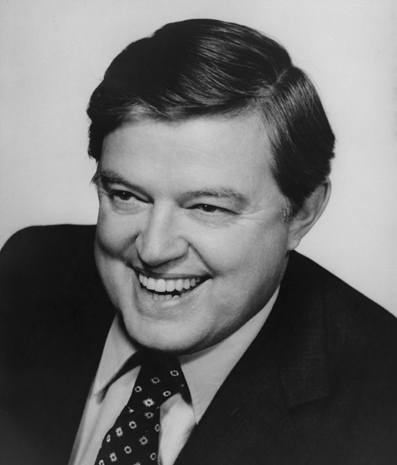 |
|
| Birth name | Frank Forrester Church III |
|---|
| Born | 25 July 1924
Boise, Idaho, U.S. |
|---|
| Died | 7 April 1984
Bethesda, Maryland, U.S. |
|---|
| Nativity | United States |
|---|
| Religion | Catholic |
|---|
| Known for | United States Senator (Idaho) |
|---|
|
| Allegiance |  United States United States |
|---|
| Branch |  United States Army United States Army |
|---|
| ASN | 01326316 |
|---|
| Rank | Second Lieutenant |
|---|
| Rank at Ritchie | Private First Class |
|---|
| Camp Ritchie | Class 15 (4 January – 3 March 1944) |
|---|
| Section | 6A |
|---|
| Battles / wars | World War II
China Burma India Theater |
|---|
Research notes on this page are compiled from the source file and later edits. They may be unverified, incomplete, or incorrect, and should not be treated as established fact. Please
correct the article or add sources on the
talk page. For class-roster terms, see
About the data.
Sources & confidence: Treat
Research notes as leads, not settled fact. Prefer NARA, the class roster, newspapers, Find a Grave, or published histories for contested claims. Mark unsourced claims with
{{Needs source}}, or explain disagreements on
talk. Baseline import notes:
About the data.
Frank Forrester III Church (1924–1984) was a Ritchie Boy (from United States; Catholic) who trained at Camp Ritchie in class 15.
Biography
Ritchie Boy Frank Church left Stanford University in 1943 to enlist in the US Army. He served as a military intelligence officer in Myanmar, China, and India. Frank Church was elected as a Democrat to the United States Senate from the State of Idaho from 1956 to 1981. He served as Chair of the House Select Committee on Government Intelligence Activities. He played a key role in the anti-Vietnam War movement and in the reform of U.S. intelligence activities.
Research notes
- Also Class 15 JapOB
- Idaho Senator
- Ob 489t
- Idaho Senator; opposed Vietnam War
- Church Committee (Intelligence)
- Portrait and summary from Notable Ritchie Boys slides (source).
Gallery
Technical record
| Field |
Imported value
|
| Approx Age at Death |
60
|
| Class_ASN |
19132478
|
| Class_Name |
CHURCH, Frank F.
|
| match_method |
pass2_unique_name
|
| row_source |
both
|
Sources
- Wikipedia: Frank Church
- Camp Ritchie class roster (classes 1–31), merged research file
- NARA World War II Army enlistment records (where a NARA ASN is present)
- 1940 U.S. Census (where a census match is present)
- Ritchie Boys of WWII Facebook page, post dated 2023-06-01 (1 post)

