Boris Krass
| Boris Krass | |
|---|---|
 | |
| Personal details | |
| Born | 4 March 1920 Cholm, Russia |
| Died | 28 February 1991 New York |
| Nativity | Russia |
| Religion | Greek Orthodox |
| Awards | European-African-Middle Eastern Campaign Medal; Good Conduct Medal |
| Military service | |
| Allegiance |  United States United States |
| Branch |  United States Army United States Army |
| ASN | 32542552 |
| Rank | Technician Fifth Grade |
| Rank at Ritchie | Private |
| Camp Ritchie | Class 7 (15 April – 12 June 1943) |
| Section | 6 |
| Enlisted | New York City, New York |
|
|
| European-African-Middle Eastern Campaign Medal | Good Conduct Medal |
{{Needs source}}, or explain disagreements on talk. Baseline import notes: About the data.
Boris Krass (4 March 1920 – 28 February 1991), born Boris Krasnoumoff, was a Cholm-born Ritchie Boy (Class 7) who trained as a Russian interpreter and psychological-warfare interrogator and served with Mobile Radio Broadcasting companies and Radio Luxembourg in the ETO.
Biography edit
Boris Krass was born Boris Krasnoumoff on 4 March 1920 in Cholm, Russia. As a child refugee he lived in Berlin, where German police issued him a Kinderausweis in January 1934 listing him as stateless; he received a U.S. quota immigration visa the same month and emigrated to the United States. He graduated from George Washington High School in New York, earned a B.S. in psychology from Long Island University in 1942, and married Yvonne C. Boet in New York that year. At naturalization he legally shortened the family name from Krasnoumoff to Krass.
Inducted on 27 October 1942, he entered active service on 10 November 1942 at Fort Dix, New Jersey, and took basic training with the 11th Armored Division at Camp Polk, Louisiana. Transferred to the Military Intelligence Training Center at Camp Ritchie, he graduated from the seventh course on 12 June 1943. That August–September he completed the Special Russian Interpreter Course (Class 10, Section 7D) alongside classmates including Henry Pleasants III, Serge C. Troubetzkoy, Serge J. Omelianuk, Victor B. Crawshaw, and Nicholas Drake; evaluators called him intelligent, strong in English and Russian, and officer material. He next studied propaganda techniques and strategic interrogation at the Psychological Warfare School, Camp Sharpe, Pennsylvania.
From May 1944 he served in the European Theater with the 2nd and 3rd Mobile Radio Broadcasting Companies and on detached and temporary duty with First and Third Army headquarters and Publicity and Psychological Warfare, Twelfth Army Group. In England he attended the School of Political Intelligence at Brondesbury. In northern France, Belgium, Luxembourg, and the Rhineland he interrogated German prisoners and Russian prisoners of war in German uniform, interviewed displaced persons, and did intelligence research at Radio Luxembourg. From December 1944 into February 1945 he worked with Counter Intelligence Corps Detachment 303, Third Army, in Luxembourg. His enlisted record credits him with the Normandy, Northern France, Ardennes, Rhineland, and Central Europe campaigns. Returned to Camp Ritchie in early 1945, he instructed on the Soviet Union’s national background, military forces, geography, and culture. Honored by the Military Intelligence Division on 22 September 1945, he was honorably discharged as a technician fifth grade at Separation Point, Phoenixville, Pennsylvania, on 28 September 1945.
After the war Krass received a commission as a first lieutenant in the Military Intelligence Reserve (service number 0962670) on 13 August 1948. In civilian life he built a sales career in business forms and office systems with The Standard Register Company and later Dashew Business Machines, then worked as a manufacturers’ representative. He died in New York on 28 February 1991.
Research notes edit
- Also completed Special Russian Interpreter Course, Class 10 Section 7D (Aug–Sep 1943).
- Wartime enlisted ASN 32542552; postwar Military Intelligence Reserve commission S.N. 0962670 (1st Lt, 13 August 1948).
- PWD / psychological warfare assignments included 2nd and 3rd Mobile Radio Broadcasting Companies and Radio Luxembourg.
- Name legally changed from Krasnoumoff to Krass at naturalization (Personal History Statement).
Gallery edit
-
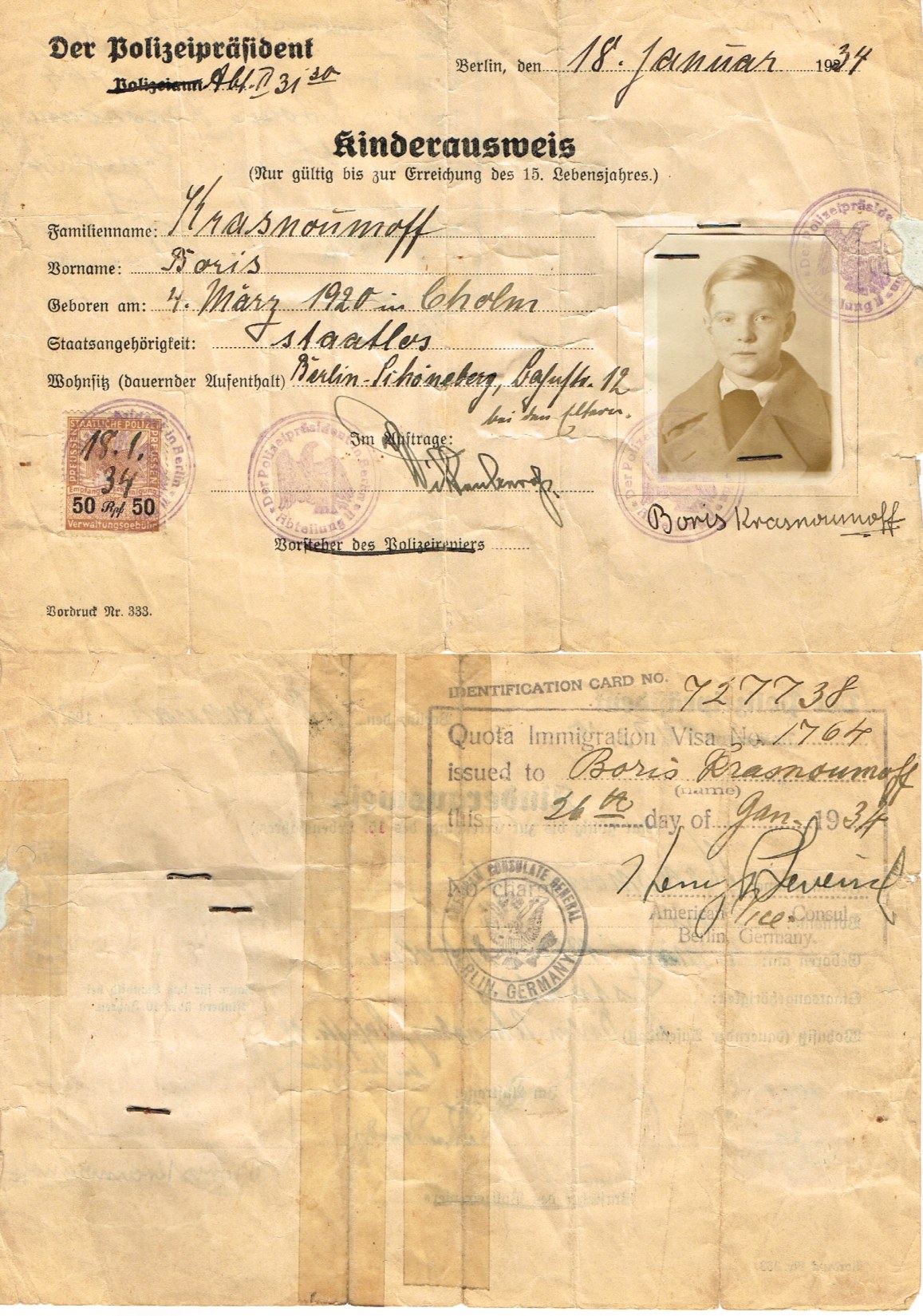 German Kinderausweis (Berlin, 18 January 1934) and U.S. quota immigration visa
 -
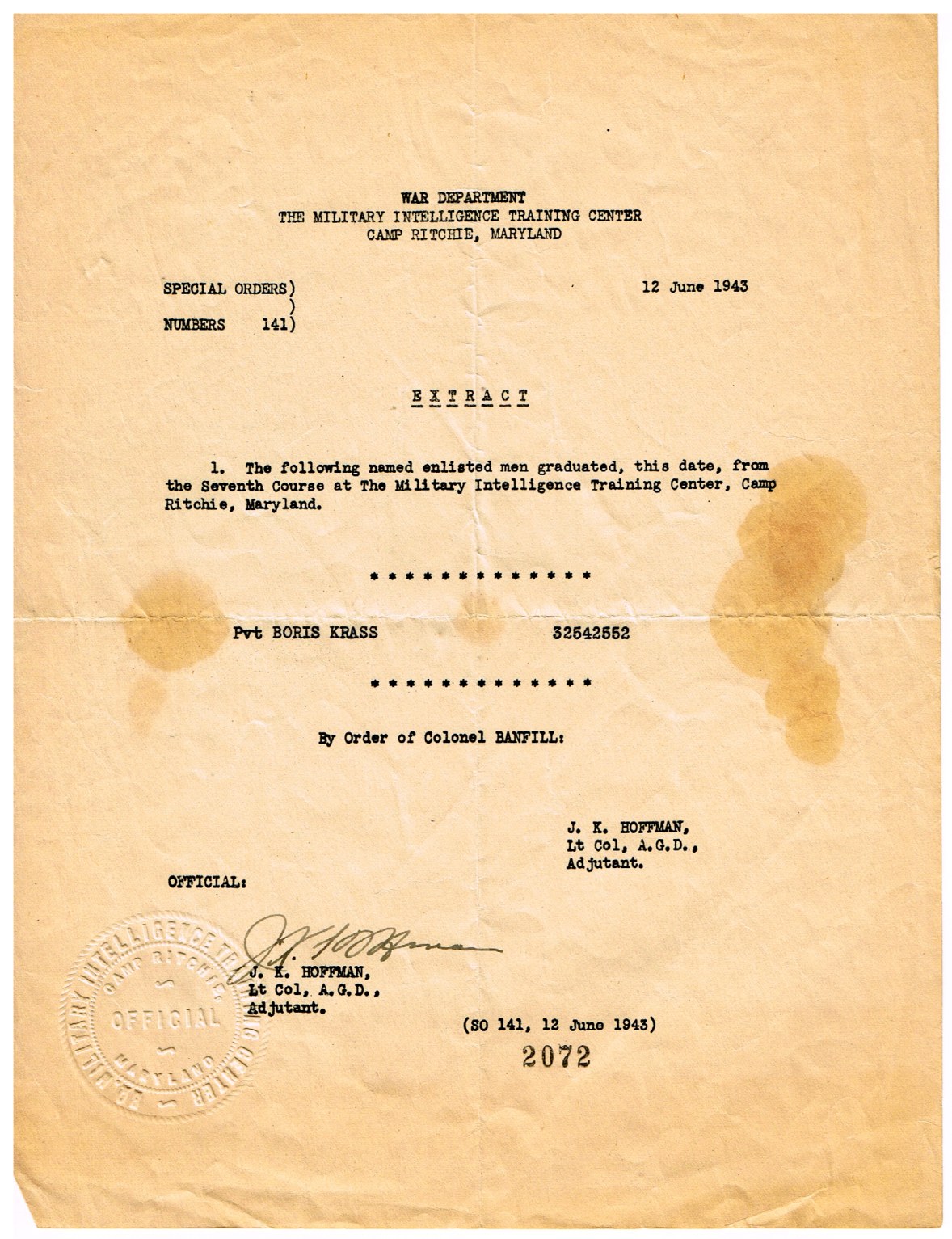 MITC Camp Ritchie graduation extract, Special Orders 141, 12 June 1943
 -
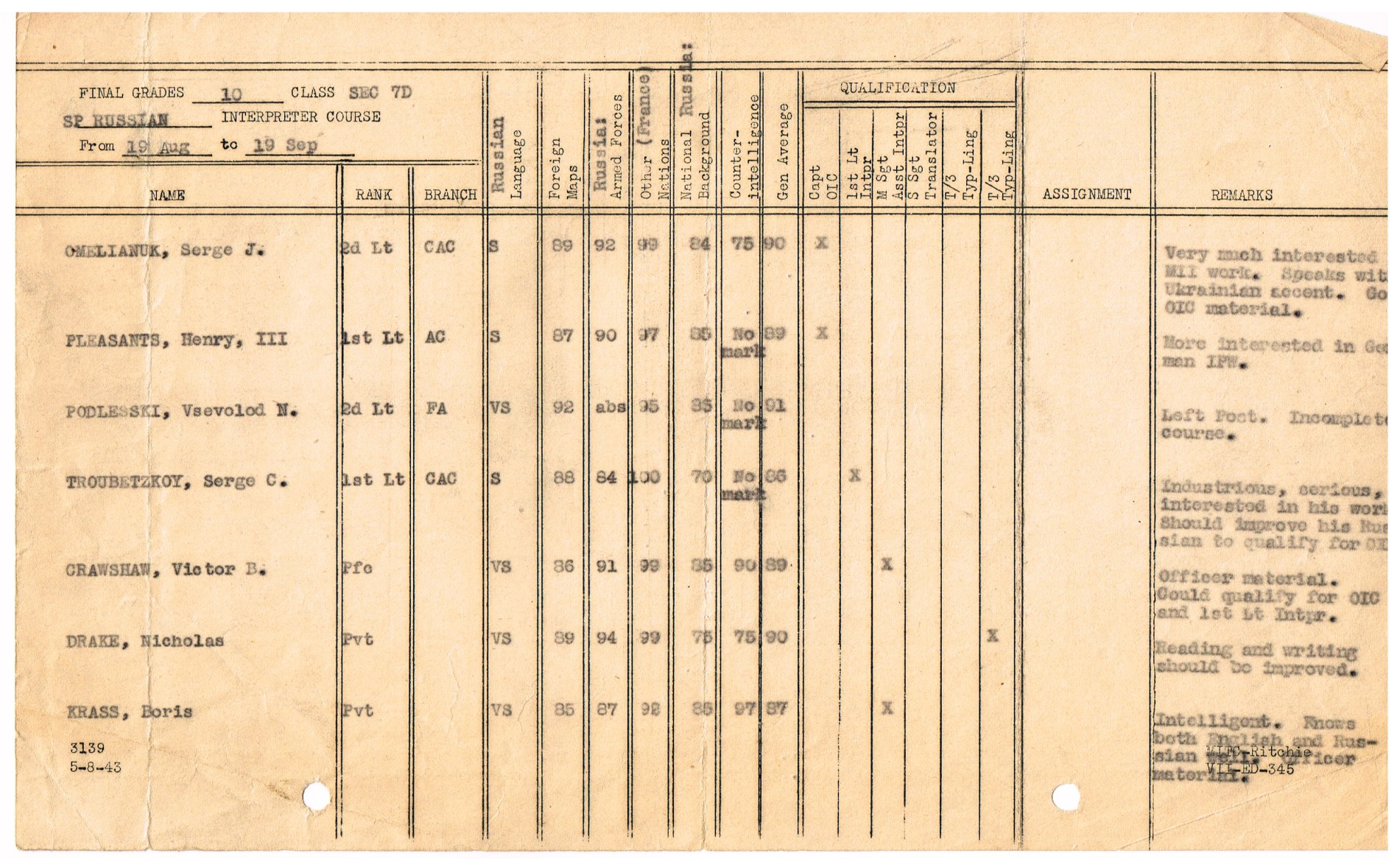 Special Russian Interpreter Course final grades, Class 10 Sec 7D
 -
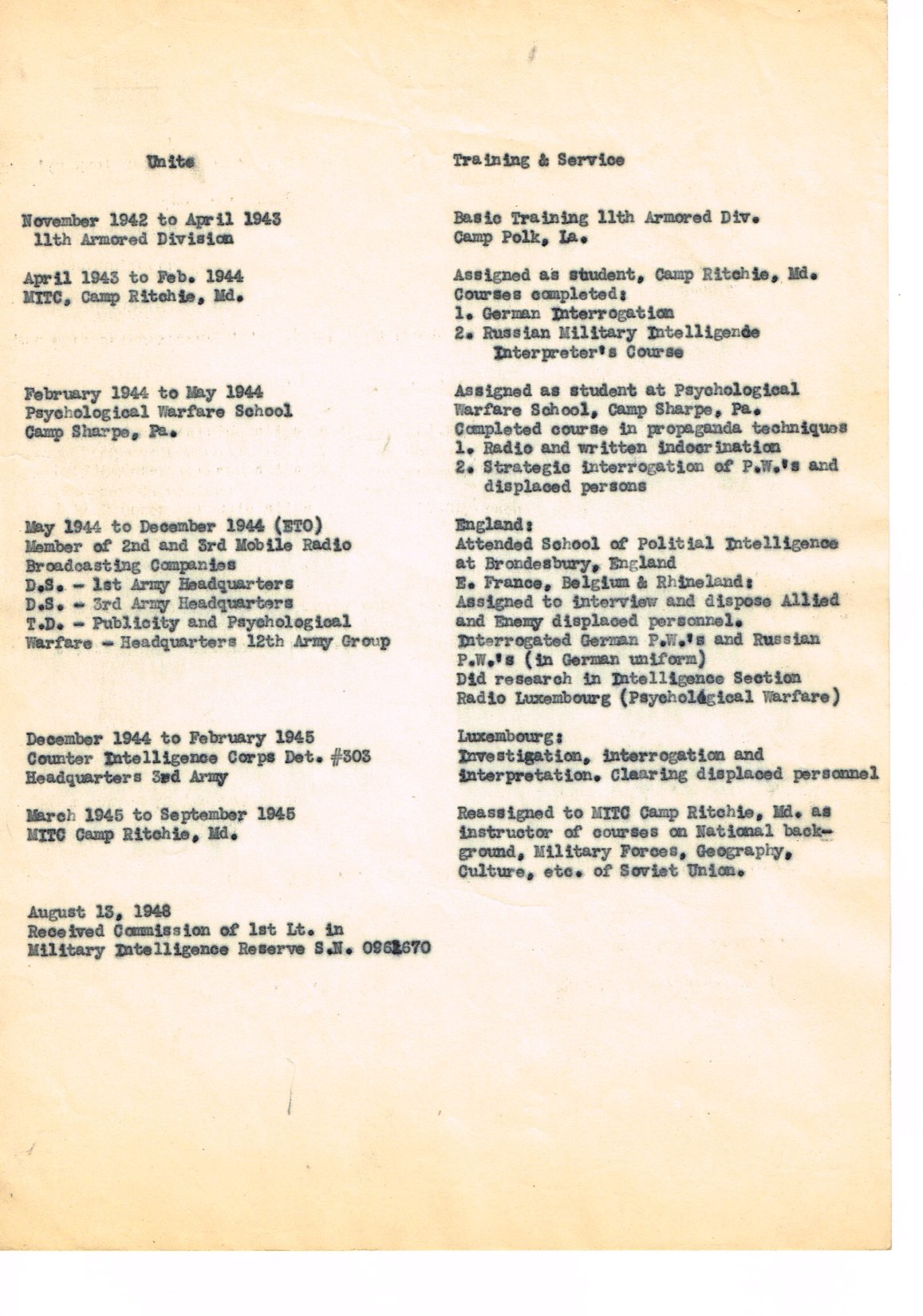 World War II service resume listing units and assignments, c. 1948
 -
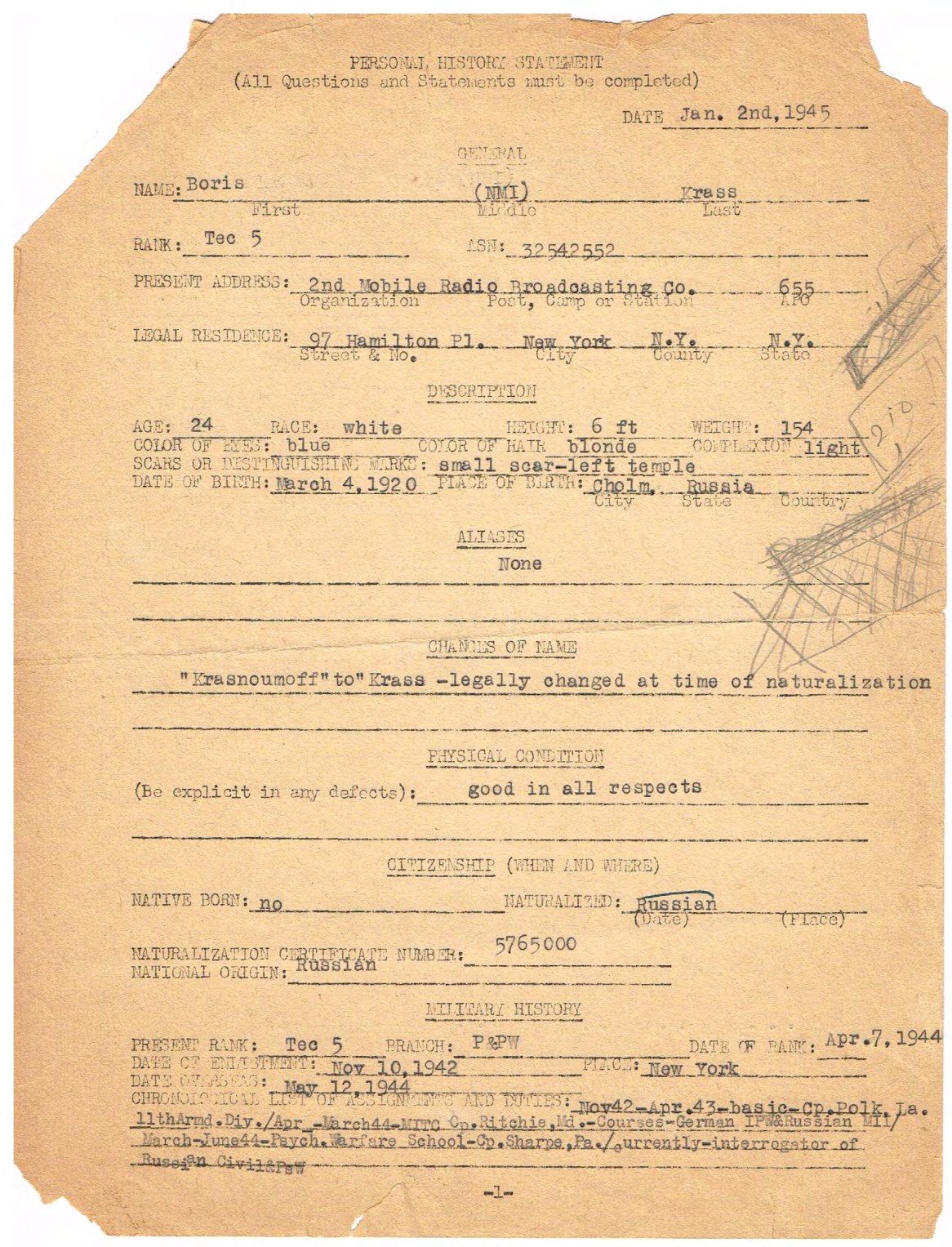 Personal History Statement, 2 January 1945 (p. 1)
 -
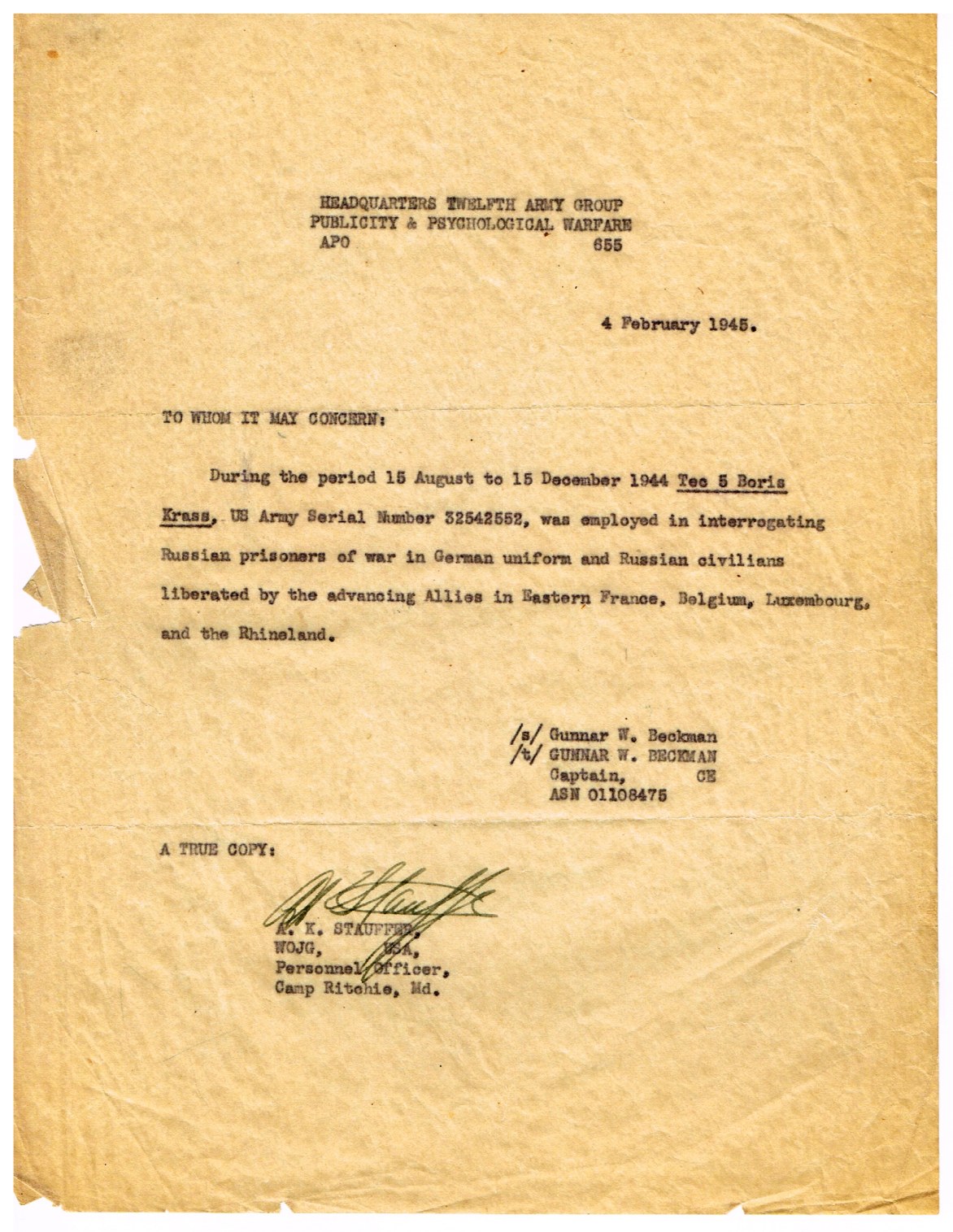 Twelfth Army Group letter documenting Russian interrogation duties, 4 February 1945
 -
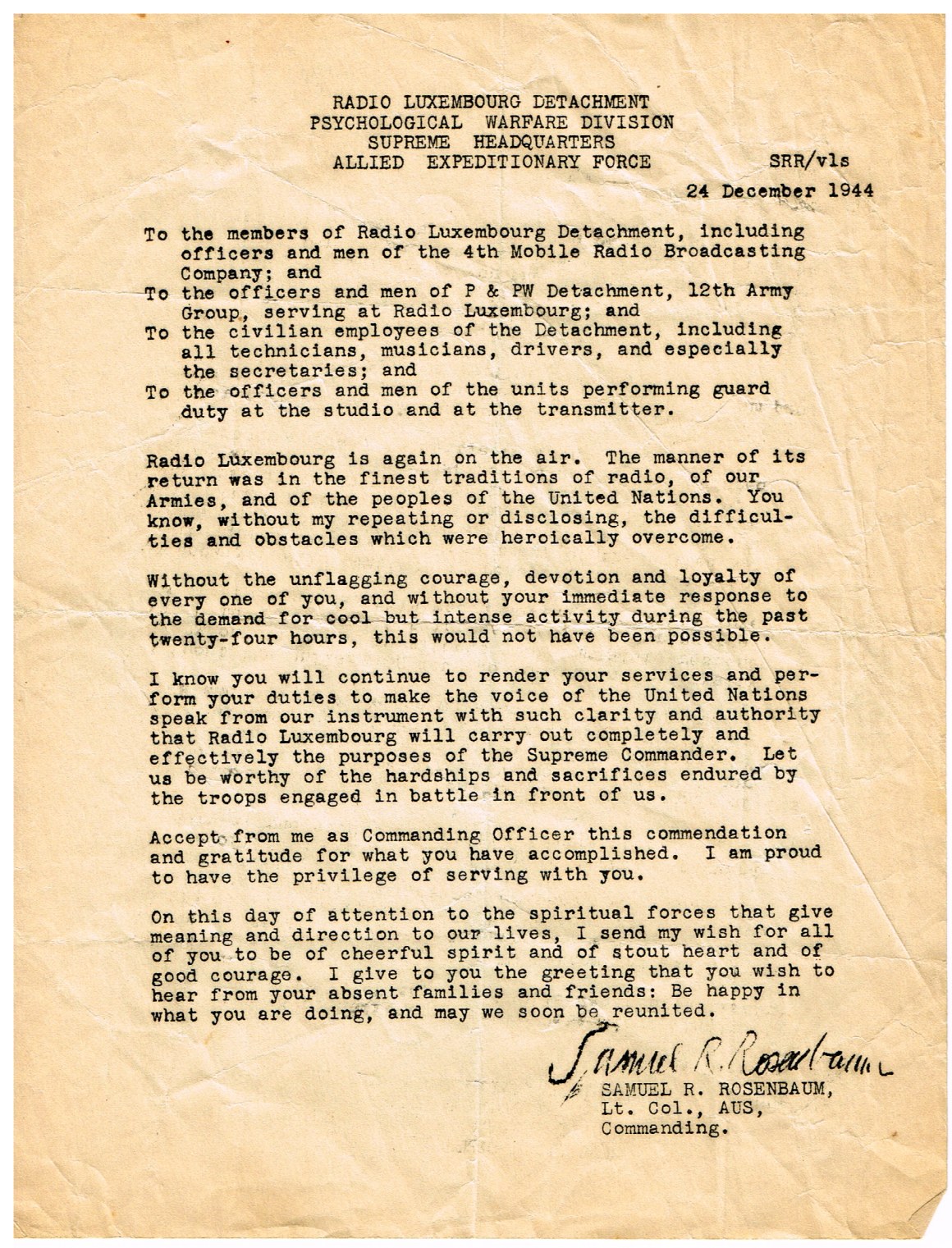 Radio Luxembourg Detachment message, 24 December 1944
 -
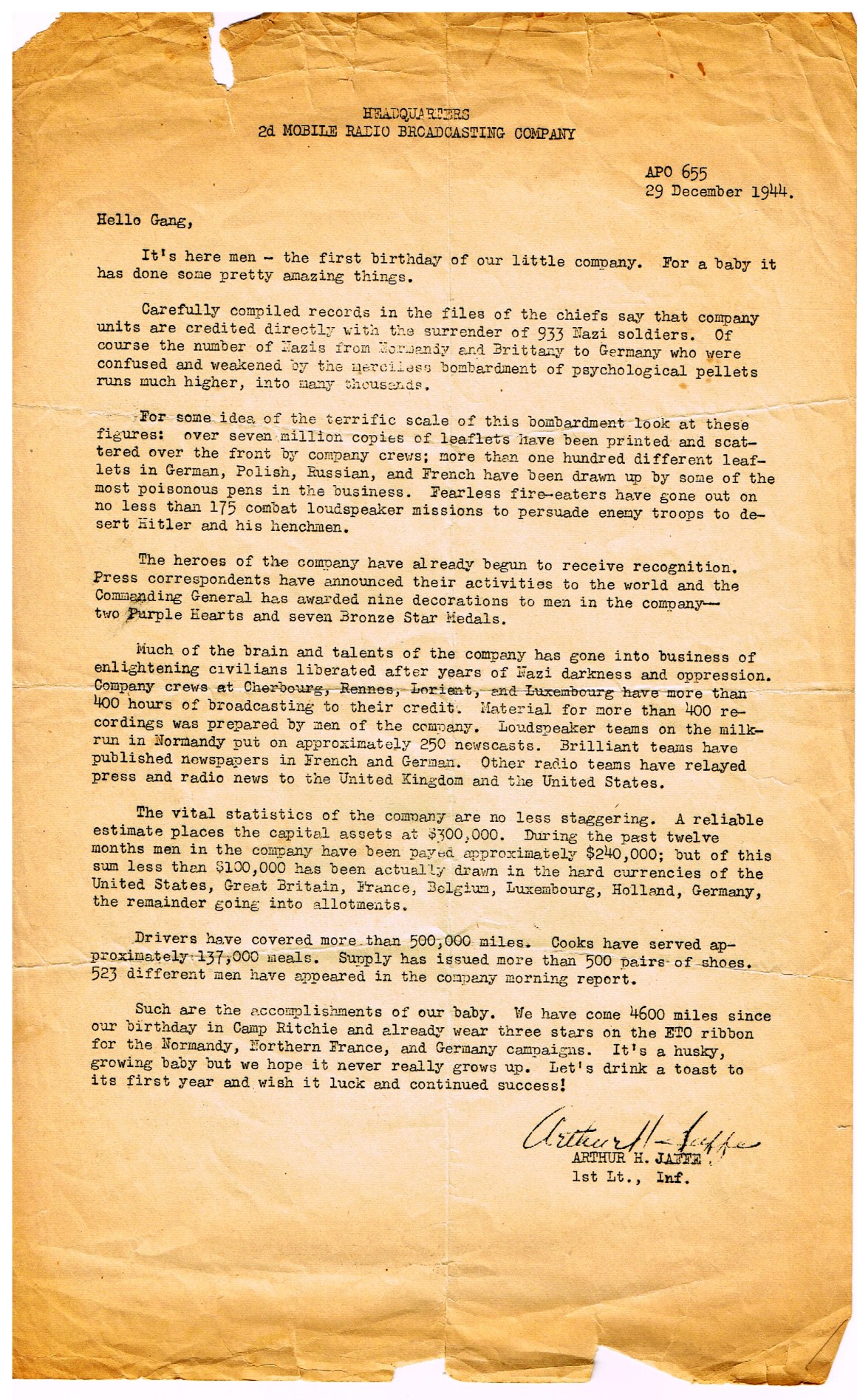 Message to 2d Mobile Radio Broadcasting Company, 29 December 1944
 -
 Enlisted Record and Report of Separation — Honorable Discharge
 -
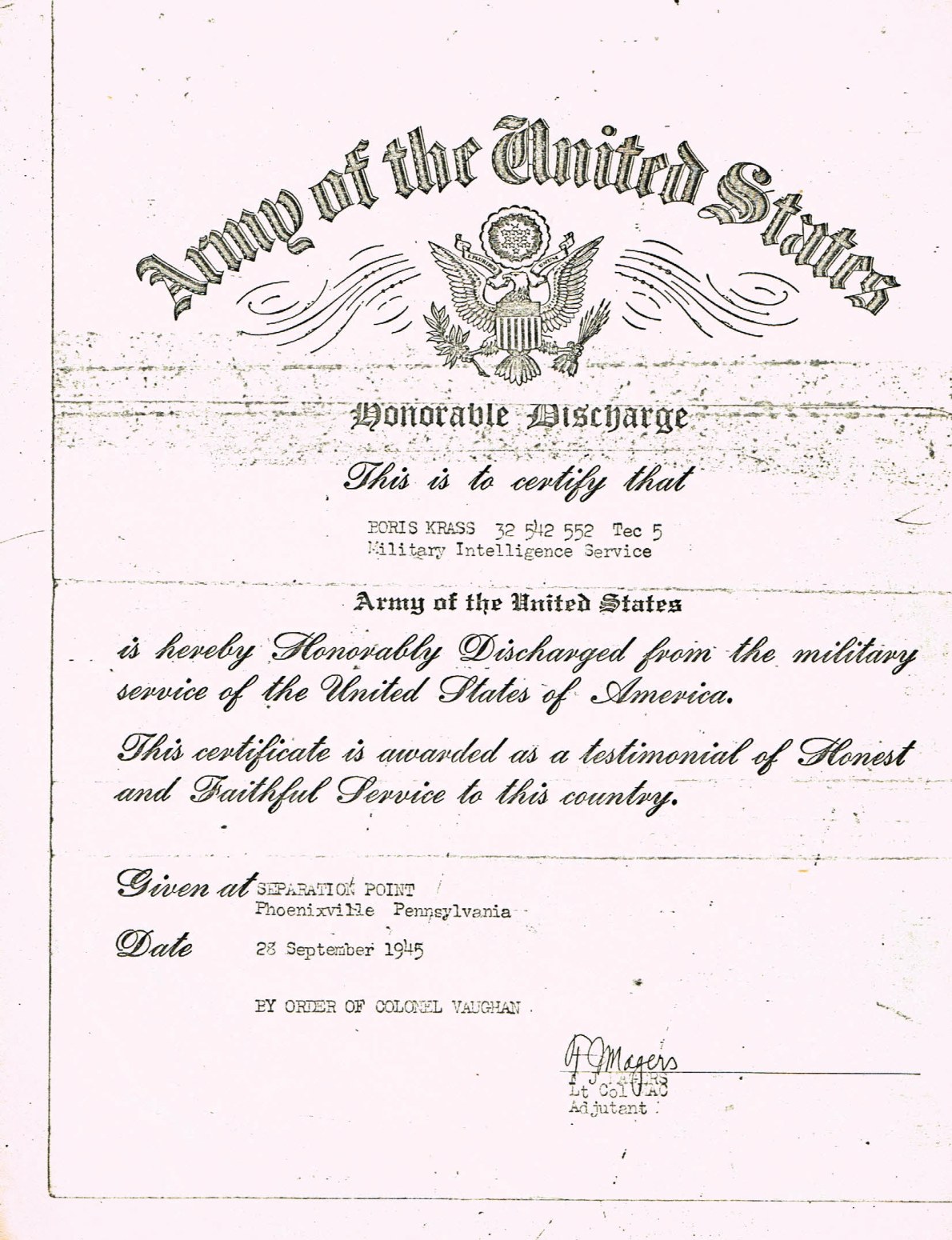 Honorable Discharge certificate, 28 September 1945
 -
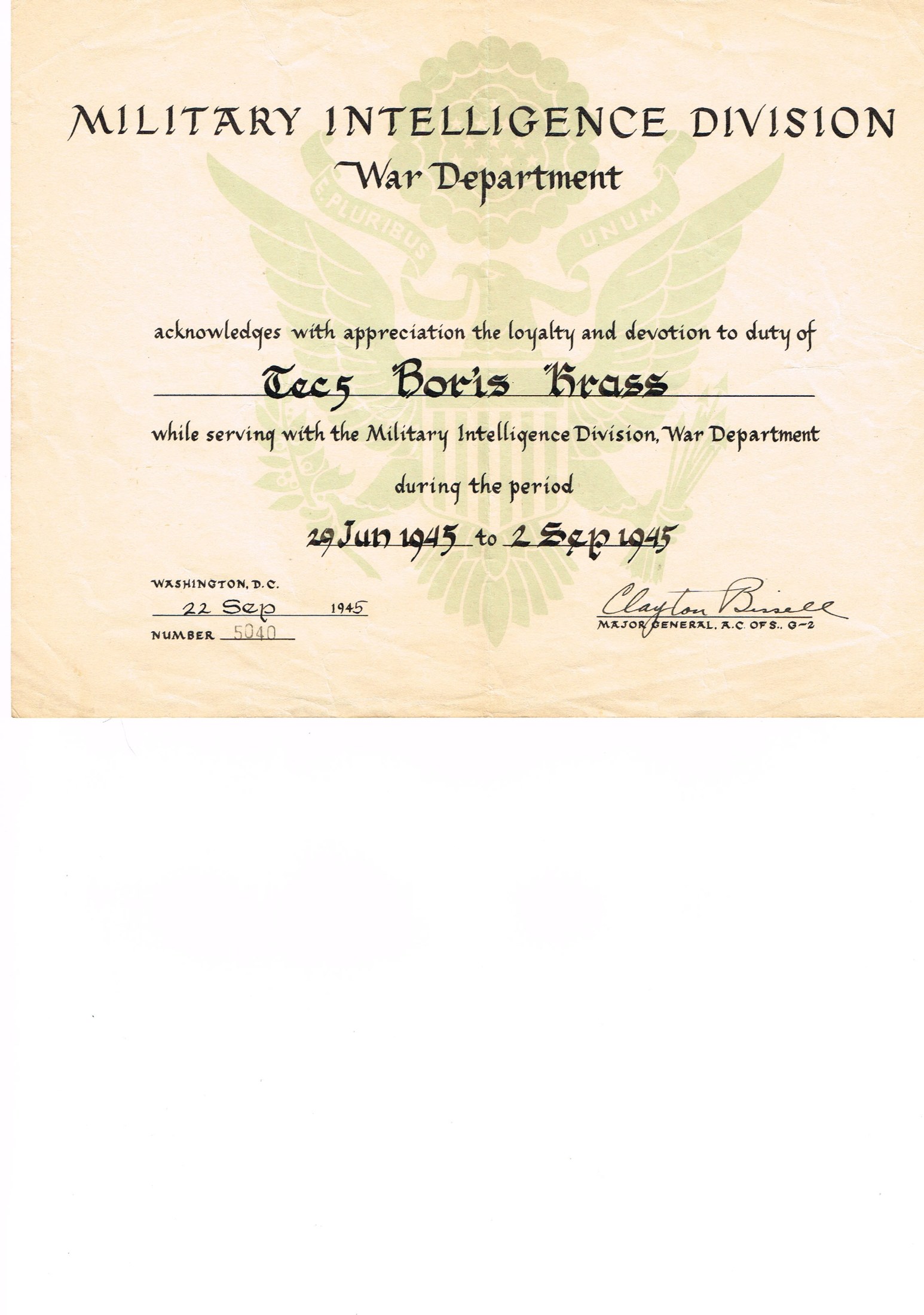 Military Intelligence Division acknowledgment, 22 September 1945
 -
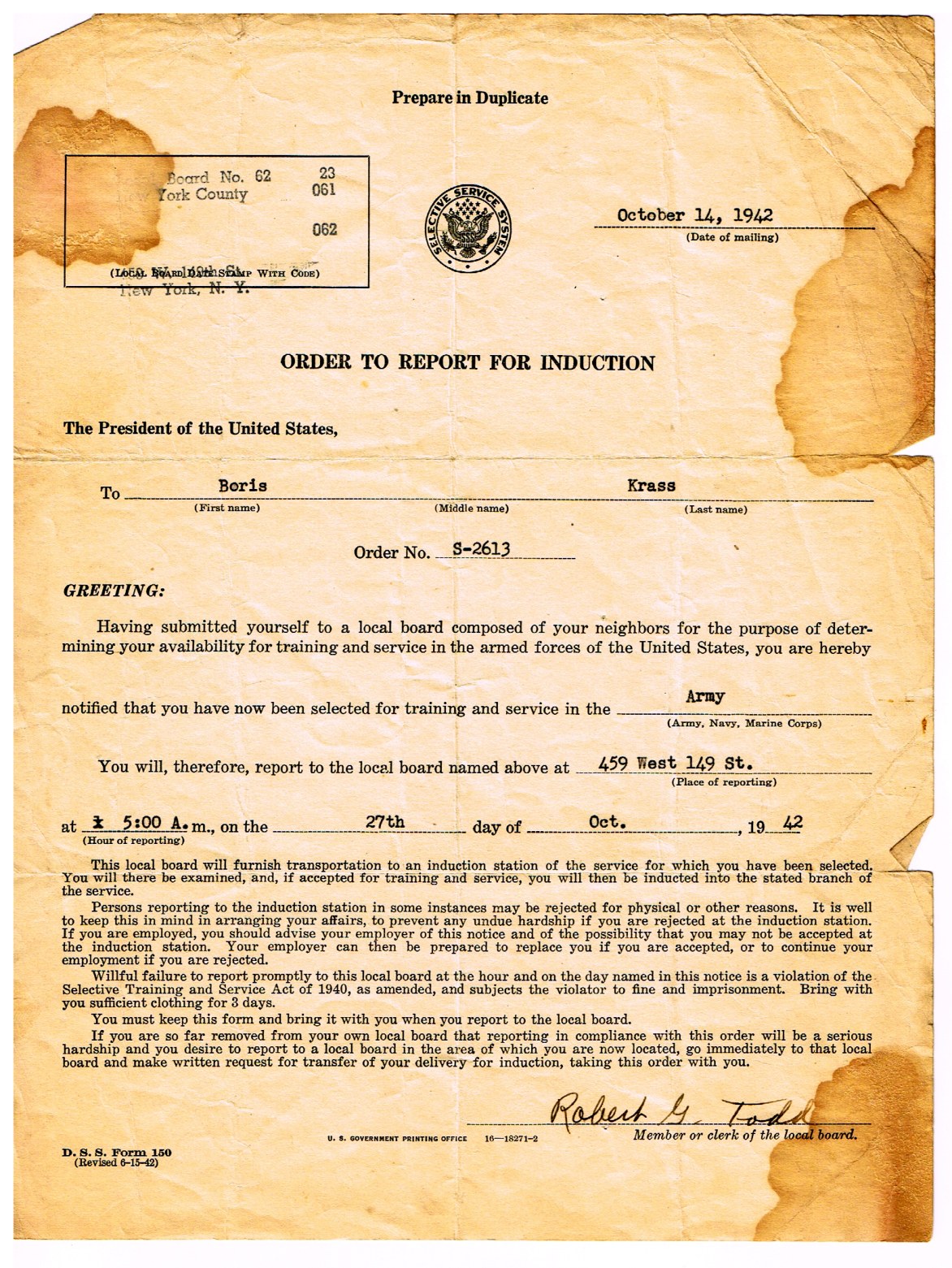 Induction / active-service entry papers
 -
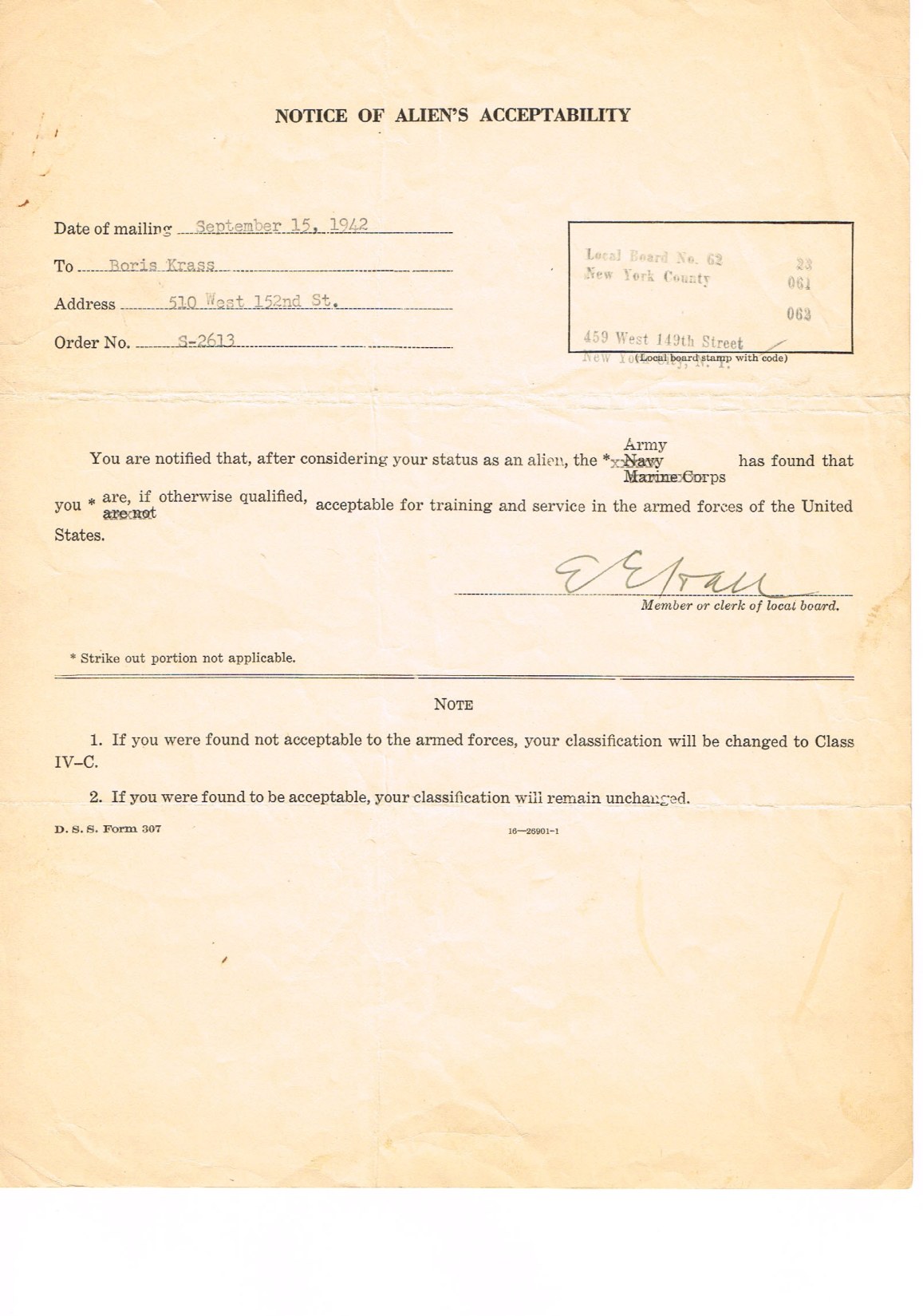 Alien status document, 15 September 1942
 -
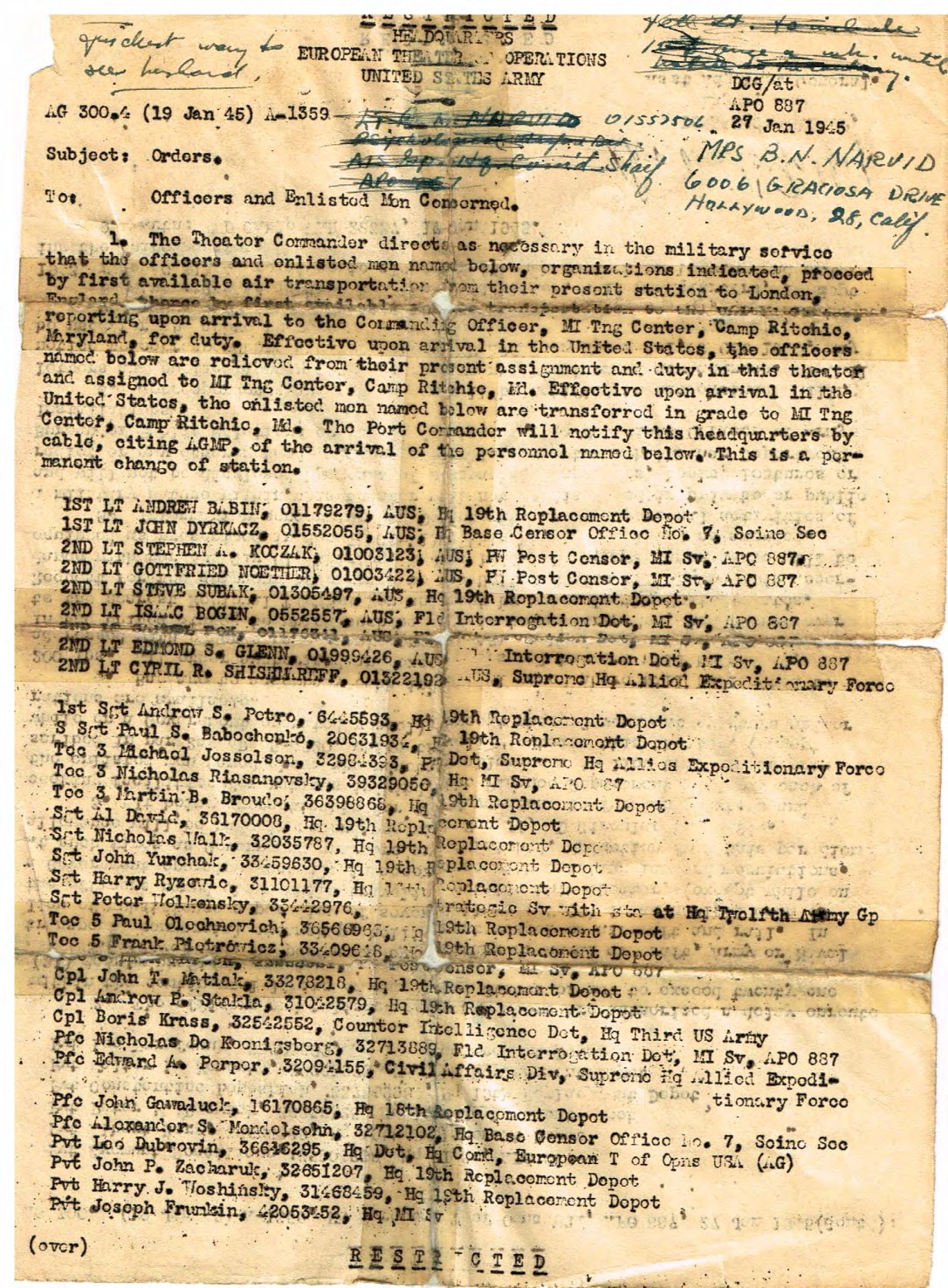 Transfer / return to Camp Ritchie, 1945
 -
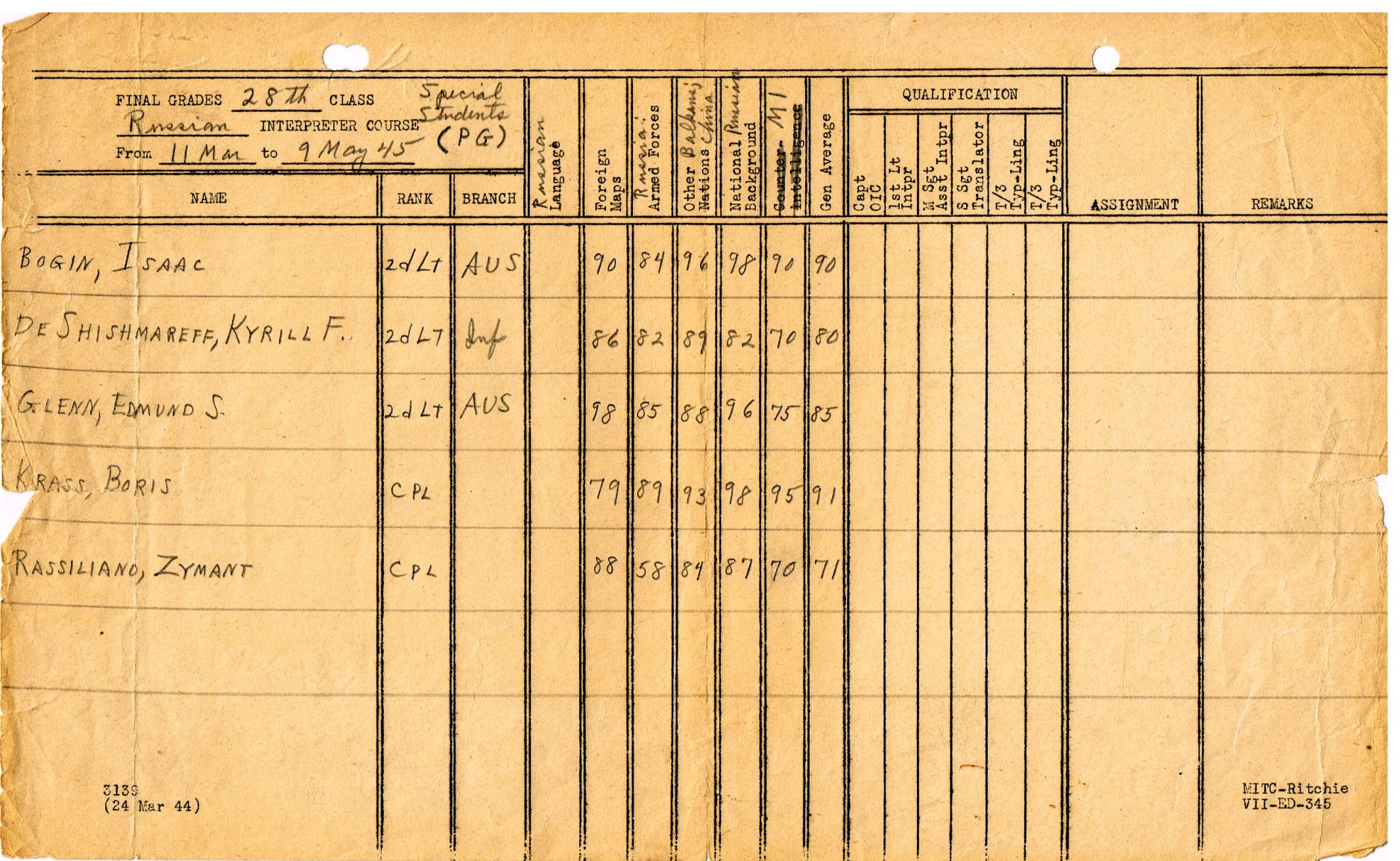 Russian interpreter grade / evaluation document, 1945
 -
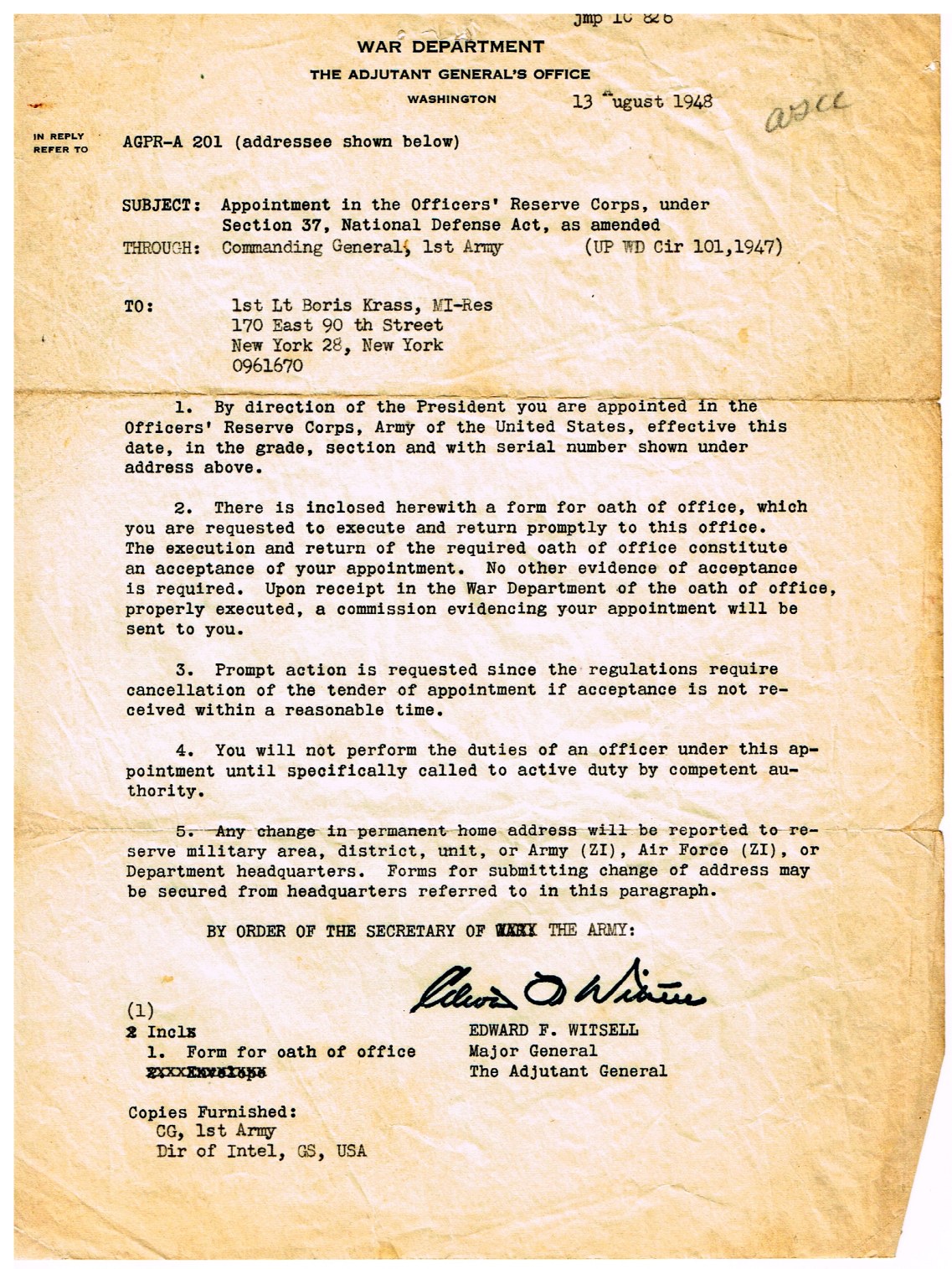 Military Intelligence Reserve Corps appointment, 13 August 1948


Technical record edit
| Field | Imported value |
|---|---|
| MRBC3 | 3 |
| Approx Age at Death | 71 |
| Nara ASN | 32542552 |
| Nara Name | KRASS BORIS |
| Nara State | 23 |
| Nara County | 61 |
| Nara POE | 2364 |
| Nara DOE | 271042 |
| Nara Grade Alpha | PVT |
| Nara Grade Code | 8 |
| Nara Branch Alpha | BI |
| Nara Branch Code | 0 |
| Branch | Branch Immaterial - Warrant Officers, USA |
| Nara Term or Enlistment | 5 |
| Term of enlistment | Enlistment for the duration of the War or other emergency, plus six months, subject to the discretion of the President or otherwise according to law |
| Defer. Date | 0 |
| Nara Source | 0 |
| Nara Nativity | O9 |
| Nara Year of Birth | 20 |
| Nara Race | J |
| Nara Race Description | White not yet a citizen |
| Nara Education | 7 |
| Nara Civilian Occupation | 295 |
| Nara Marital Status | 2 |
| Nara Height (inches) | 71 |
| Nara Weight (lbs) | 139 |
| Class_ASN | 32542552 |
| Class_Name | KRASS, Boris |
| match_method | asn_exact_name_exact |
| row_source | both |
Timeline edit
- 4 March 1920 — Born Boris Krasnoumoff in Cholm, Russia
- 18 January 1934 — German Kinderausweis issued in Berlin (listed as stateless); U.S. quota immigration visa No. 1764 issued 26 January 1934
- 1934 — Emigrated from Germany to the United States
- 1938 — Graduated from George Washington High School, New York
- 1942 — B.S. in psychology, Long Island University; married Yvonne C. Boet in New York
- 27 October 1942 — Inducted into the U.S. Army, New York
- 10 November 1942 — Entered active service at Fort Dix, New Jersey
- November 1942 – April 1943 — Basic training, 11th Armored Division, Camp Polk, Louisiana
- 23 March 1943 — Transferred to Camp Ritchie, Maryland
- 12 June 1943 — Graduated seventh course, Military Intelligence Training Center, Camp Ritchie
- 19 August – 19 September 1943 — Special Russian Interpreter Course, Class 10 Section 7D, Camp Ritchie (qualified as assistant interpreter)
- February/March – May/June 1944 — Psychological Warfare School, Camp Sharpe, Pennsylvania
- 12 May 1944 — Departed for overseas service; arrived England 23 May 1944
- May – December 1944 — 2nd and 3rd Mobile Radio Broadcasting Companies; D.S./T.D. with First and Third Army headquarters and P&PW, Twelfth Army Group; intelligence work at Radio Luxembourg
- 15 August – 15 December 1944 — Interrogated Russian POWs in German uniform and liberated Russian civilians in eastern France, Belgium, Luxembourg, and the Rhineland
- December 1944 – February 1945 — CIC Detachment 303, Headquarters Third Army, Luxembourg
- 19 February 1945 — Left the ETO; arrived United States 26 February 1945
- March – September 1945 — Instructor at Camp Ritchie on Soviet national background, military forces, geography, and culture
- 22 September 1945 — Military Intelligence Division, War Department, acknowledgment of service
- 28 September 1945 — Honorable discharge as Tec 5, Military Intelligence Service, Separation Point, Phoenixville, Pennsylvania
- 13 August 1948 — Commissioned first lieutenant, Military Intelligence Reserve (S.N. 0962670)
- 28 February 1991 — Died in New York
Sources edit
- Transfer / return to Camp Ritchie papers, 1945
- Induction / entry into active service papers
- Military Intelligence Reserve appointment, 13 August 1948
- Military Intelligence Division acknowledgment, 22 September 1945
- Honorable Discharge certificate, 28 September 1945
- Enlisted Record and Report of Separation (Honorable Discharge)
- Radio Luxembourg Detachment Christmas message, 24 December 1944
- Twelfth Army Group P&PW letter on Russian interrogation duties, 4 February 1945
- Special Russian Interpreter Course final grades, Class 10 Sec 7D, August–September 1943
- MITC graduation extract, Special Orders 141, 12 June 1943
- World War II service resume (units and assignments), c. 1948
- Personal History Statement, 2 January 1945
- German Kinderausweis and U.S. immigration visa, January 1934
- Family RB Archive packet (daughter permission; documents also shared with Camp Ritchie Museum / The Ritchie History Museum)
- Camp Ritchie Museum, Inc. (The Ritchie History Museum), Classes 1–31 roster data
- Dan Gross research spreadsheets, including original Excel timeline/roster work, combined with other research and records
- NARA World War II Army enlistment records (where a NARA ASN is present)
- 1940 U.S. Census (where a census match is present)
- Ritchie Boys of WWII Facebook page, post dated 2022-10-06 (18 posts)
- OCR-reviewed Facebook gallery document: 5744108042277736.jpg
- OCR-reviewed Facebook gallery document: 5744120795609794.jpg
- OCR-reviewed Facebook gallery document: 5744108048944402.jpg
- OCR-reviewed Facebook gallery document: 5744120802276460.jpg
- OCR-reviewed Facebook gallery document: 5744108045611069.jpg
- OCR-reviewed Facebook gallery document: 5744120805609793.jpg
- Camp Ritchie document, associated gallery scan
- Camp Ritchie document, associated gallery scan
- Military Intelligence Service document, associated gallery scan
- Enlisted Record and Report of Separation, associated gallery scan
- Enlisted Record and Report of Separation, associated gallery scan
- Military Intelligence Division recognition certificate, 22 September 1945
- Military Intelligence Division recognition certificate, associated scan
- Ritchie Boys of WWII Facebook page, post dated 6 October 2022 (biographical account and gallery documents)


