Soft launch: Soldier biographies and research notes vary in completeness. Prefer class-roster, NARA, newspapers, and other cited sources for contested facts — treat Research notes as leads, not settled history. Anyone can correct a page; contact us with questions.
Howard M. Schott
| Howard M. Schott | |
|---|---|
| Personal details | |
| Born | 1923 New York on 17 June |
| Died | 2005 |
| Nativity | United States |
| Military service | |
| Allegiance |  United States United States |
| Branch |  United States Army United States Army |
| ASN | 32809746 |
| Rank | Private First Class |
| Camp Ritchie | Class 19 (16 May – 13 July 1944) |
| Section | 7C |
| Enlisted | New York City, New York |
| Teams | IPW 406, IPW 167, MII 496-G |
{{Needs source}}, or explain disagreements on talk. Baseline import notes: About the data.
Howard M. Schott (1923–2005) was a Ritchie Boy (from United States) who trained at Camp Ritchie in class 19 and served with IPW Team 406;167.
Biography
Howard Schott was a Ritchie Boy. The international early music community lost one of its greatest advocates on 23 June 2005. Howard Schott died during a brief hospitalization just a few days after his beloved Boston Early Music Festival. Born in New York on 17 June 1923 and raised in the suburb of White Plains, Howard received early encouragement in music from his parents, both non-musicians. Upon completion of high school at 16, he was accepted by both Harvard and Yale, but chose Yale because of an interest in the harpsichord. Yale, as well as his father, insisted that he wait a year, during which he studied piano with Hans Neumann in New York. While at Yale, Howard majored in French, although he also found the time to study harpsichord with Ralph Kirkpatrick. Howard was drafted into the Second World War at 19 during his third year at Yale. At first he was stationed in Wisconsin in order to teach reading and writing to draftees from Appalachia, but he was later transferred to Ann Arbor for intensive study of German. At Ann Arbor,he sent for his typewriter, enabling him to complete his undergraduate thesis on Baudelaire and to graduate in1944. He then went to Camp Ritchie in Maryland, where he met Henry Pleasants and worked for the US Army Military Intelligence Service. While abroad during the war, Howard was involved with translation and prisoner interrogation and co-authored a Glossary of German administrative and political terminology. Following his war service (1943-6) Howard returned to New Haven to attend Yale Law School, where he also taught French to undergraduates and was able to resume study with Kirkpatrick. After graduating in 1948 he worked for a number of organizations, including the Bureau of Indian Affairs under Felix Cohen, the Atomic Energy Commission and Shering Pharmaceuticals, for which he traveled extensively. Howard passed the New York State bar examination with the highest points in the state, a distinction that won him a monetary award which he used to pay for piano lessons. When preparing Playing the harpsichord in the late196os, he remarked that, if the manuscript were accepted by a publisher, he would pursue a doctorate in musicology. The book, eventually released in 1971, was accepted,and Howard began study at Oxford in 1968. His dissertation, A critical edition of the works of J. Froberger, led to the DPhil in 1978. Like Playing the harpsichord, his edition of Froberger for Heugel remains in wide use today. After a brief return to New York Howard moved to Boston to pursue a dual career in musicology and law.He lectured at a number of Boston schools, including New England Conservatory. Later, he worked for the National Association of Security Dealers and the American Arbitration Association, mediating and arbitrating over loo cases for Prudential Insurance. Throughout his Boston years Howard was intensely engaged in the world of music, particularly early music. He wrote for New Grove, co-authored the Catalogue of musical instruments in the Victoria & Albert Museum:part I: Keyboard instruments, and edited the monograph series, The Historical Harpsichord. An International Editorial Advisor for Early music, he was a frequent contributor, often documenting Boston's musical activities. Howard had a remarkable memory, a knack for languages and an unforgettable way with words. His knowledge in all areas of music was extraordinary, especially in the field of opera, and he had a particular fondness for Wagner. His retention of composers' themes, catalogue numbers and performance dates was daunting. The following was written by a friend of Howard, by the name of Paul Cienniwa. It was from the "Early Music, Vol. 4" dated November 2005.
Research notes
- http://muse.jhu.edu/login?auth=0&type=summary&url=/journals/early_music/v033/33.4cienniwa01.pdf
- 496-G
Gallery
-
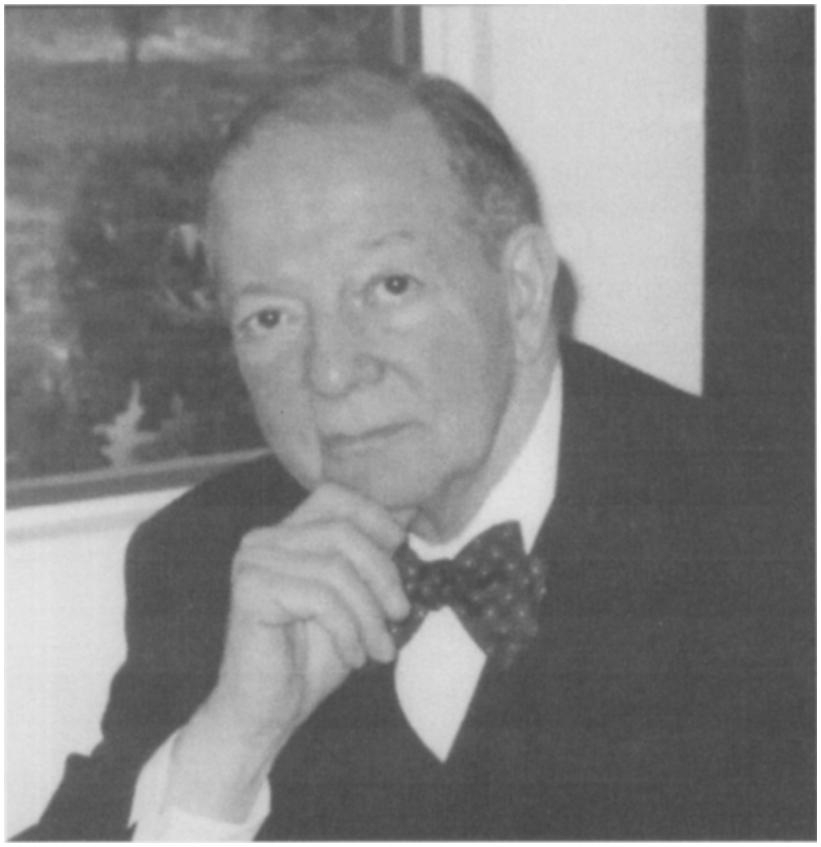 He served on the boards of numerous organizations, including the Boston Early Music Festival, the Yale Collection of Musical Instruments, the Boston Clavichord Society and the American Recorder Society.

Technical record
| Field | Imported value |
|---|---|
| Approx Age at Death | 82 |
| Nara ASN | 32809746 |
| Nara Name | SCHOTT HOWARD M |
| Nara State | 23 |
| Nara County | 119 |
| Nara POE | 2364 |
| Nara DOE | 180243 |
| Nara Grade Alpha | PVT |
| Nara Grade Code | 8 |
| Nara Branch Alpha | BI |
| Nara Branch Code | 0 |
| Branch | Branch Immaterial - Warrant Officers, USA |
| Nara Term or Enlistment | 5 |
| Term of enlistment | Enlistment for the duration of the War or other emergency, plus six months, subject to the discretion of the President or otherwise according to law |
| Defer. Date | 0 |
| Nara Source | 0 |
| Nara Nativity | 23 |
| Nativity.1 | NEW YORK |
| Nara Year of Birth | 23 |
| Nara Race | 1 |
| Nara Race Description | White citizen |
| Nara Education | 6 |
| Nara Civilian Occupation | 992 |
| Nara Marital Status | 6 |
| Nara Height (inches) | 70 |
| Nara Weight (lbs) | 168 |
| Class_ASN | 32809746 |
| Class_Name | SCHOTT, Howard M. |
| match_method | asn_exact_name_exact |
| row_source | both |
Sources
- Camp Ritchie class roster (classes 1–31), merged research file
- NARA World War II Army enlistment records (where a NARA ASN is present)
- 1940 U.S. Census (where a census match is present)
- Ritchie Boys of WWII Facebook page, post dated 2022-12-30 (1 post)