Edgar H. Holton
| Edgar H. Holton | |
|---|---|
| Personal details | |
| Born | 24 December 1923 Austria |
| Nativity | Austria |
| Religion | Jewish |
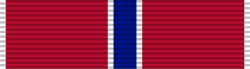
| Awards | Bronze Star Medal |
| Military service | |
| Allegiance |  United States United States |
| Branch |  United States Army United States Army |
| ASN | 0555178 |
| Rank | Captain |
| Camp Ritchie | Class 18 (13 April – 10 June 1944) |
| Team | MII 420-G |
|
| Bronze Star Medal |
{{Needs source}}, or explain disagreements on talk. Baseline import notes: About the data.
Edgar H. Holton (born 24 December 1923), known as Ed Holton, was an Austrian-born Jewish Ritchie Boy (Class 18) who interrogated German prisoners in the European Theater, earned a Bronze Star, and later questioned Hermann Göring and Walter Schellenberg in connection with the Nuremberg proceedings.
Biography edit
Edgar H. Holton (often called Ed Holton) was born on 24 December 1923 in Austria to a Jewish family and later lived in the United States. He became a naturalized U.S. citizen on 18 December 1943 and graduated from Camp Ritchie with Class 18 (German) on 10 June 1944.
Holton came ashore in Normandy several days after D-Day as a second lieutenant. He described early work clearing vacated Gestapo headquarters and later interrogating prisoners, civilians, and defectors during the Battle of the Bulge, often using food and respectful treatment to open conversations. By the end of the war he had reached captain and received the Bronze Star.
In 1946 he took part in postwar interrogations preparing for the Nuremberg trials, including sessions with Hermann Göring and SS Brigadeführer Walter Schellenberg. In a 2014 San Francisco Chronicle interview he recalled Göring’s pedantic complaint that his villa had been “plundered,” not “looted,” and Schellenberg’s detached discussion of gas-chamber design. After the war Holton became an accountant and later lived in Mill Valley, California.
Research notes edit
- Enlisted ASN 32974453 (roster spelling
- Edger
- same person as this officer profile)
- WH Archives
- Gross misc file Ralph Hockley - Interview.doc is an SF Chronicle interview of Ed Holton (not Ralph Hockley)
Gallery edit
After you are autoconfirmed, upload a photo and add [[File:Example.jpg|thumb|caption]] here, or set |photo=Example.jpg in the infobox.
Technical record edit
| Field | Imported value |
|---|---|
| row_source | demographics |
Timeline edit
- Born 24 December 1923 in Germany of Austrian parents (Jewish).
- Born 24 December 1923 in Austria (Jewish).
- 18 December 1943 — Became naturalized citizen 6090131.
- 10 June 1944 — Graduated with Class 18 / Section 5B (German).
- 24 September 1944 — Relieved from attachment with the 303rd CIC Detachment.
- 7 April 1945 — Pfc Peter P. Oppenheim assigned to Team.
- 30 June 1945 — Holton assigned to HQ US Group CC for duty w/Economics Division PCS.
- 1946 — Postwar interrogations including Hermann Göring and Walter Schellenberg (Nuremberg preparation).
- "The only thing the Gestapo left behind as they fled was booby-trapped toilet seats, and I could tell by the elevation of the seat," he said.
- 1/44 Promoted to Pfc and was transferred to college in Philadelphia (ASTU).
- After the war, the Army ordered up an assessment of the Ritchie Boys by Col. Robert Schow, who concluded in a lengthy report that the unit was "extremely valuable to all commands to which they were attached.".
- By the end of the war, he had made captain, earned a Bronze Star - and was made a U.S. citizen, like the other Ritchie Boys, for his service.
- By the end of the war, he had made captain, earned a Bronze Star - and was made a U.S. citizen, like the other Ritchie Boys, for his service. Then came Nuremberg.
- That chamber also earned Schellenberg a special medal from Hitler, "and he was very proud of that," Holton added. "I asked him how many people he gassed, and he said 345,245 was his weekly total at one point.
- That unit is largely forgotten today, and all save 300 of the 3,500 members have died.
- The interrogation unit was composed of young German and Austrian Jewish men who fled to America as World War II broke out, got drafted as foreigners and were trained to be intelligence officers.
- Came ashore Normandy several days after D-Day; Battle of the Bulge interrogations.
Sources edit
- Dan Gross research archive (miscellaneous timeline-adjacent documents; not uploaded): Ralph Hockley - Interview.doc (SF Chronicle Holton interview; mislabeled filename)
- Kevin Fagan, “War stories from a Nazi interrogator, now a Mill Valley retiree,” San Francisco Chronicle (21 June 2014)
- Camp Ritchie Museum, Inc. (The Ritchie History Museum), Classes 1–31 roster data
- Dan Gross research spreadsheets, including original Excel timeline/roster work, combined with other research and records
- NARA World War II Army enlistment records (where a NARA ASN is present)
- 1940 U.S. Census (where a census match is present)
- Dan Gross, Timeline of Edgar H. Holton for Camp Ritchie (private research document; 1 source documents reviewed)
- Dan Gross, Timeline of Holton, Edgar H. for Camp Ritchie (private research files; selected non-private narrative findings; 1 source files: EDGAR H. HOLTON.doc)